

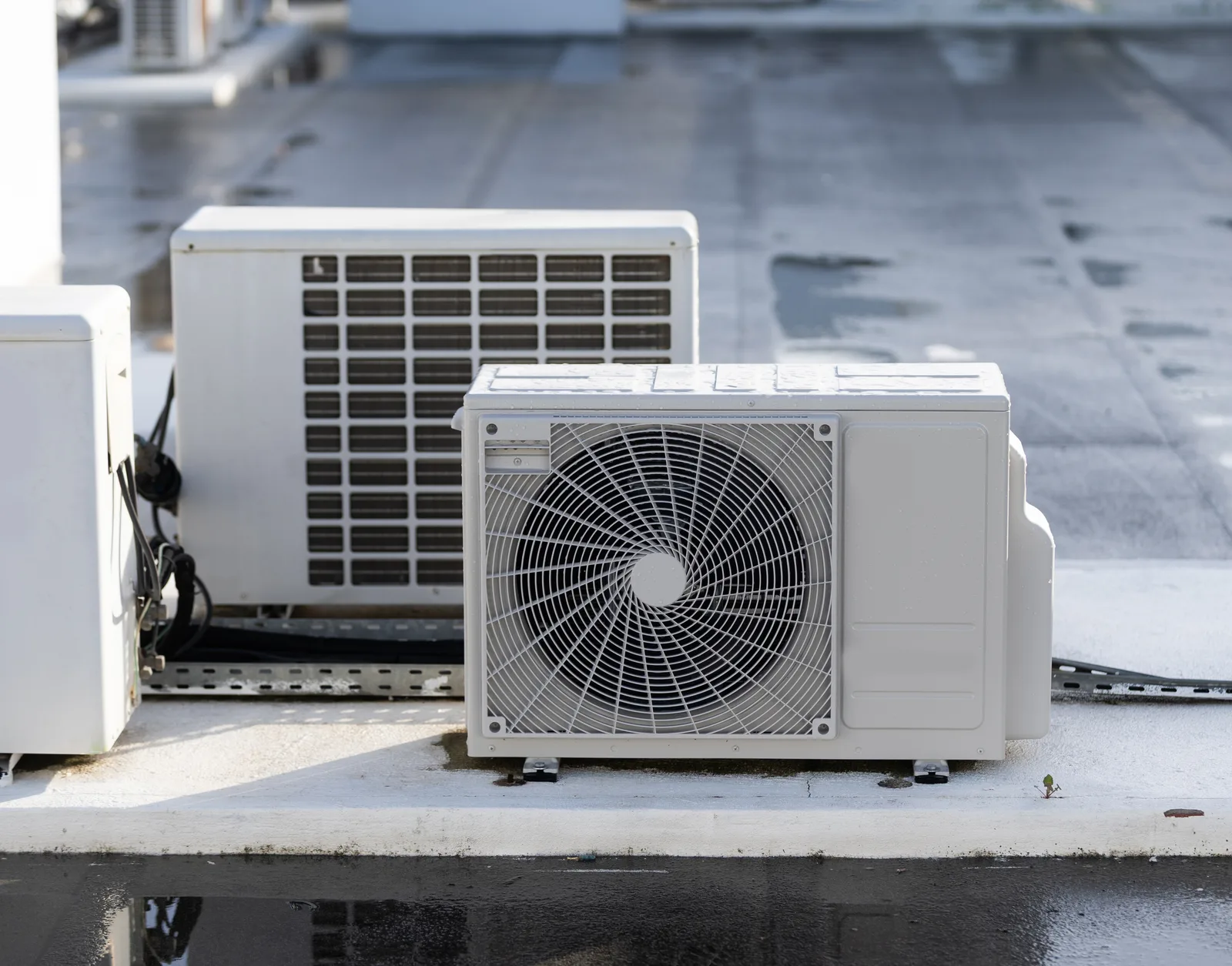
Chiller technician insurance should be confirmed against the parts of the job that set chiller work apart: refrigerant handling, rigging, machinery-room hazards and water. No official source we read says which policy pays for a chiller loss, so describe the work to your agent and get the answers in writing. Treat this as general education, not legal advice.
What makes chiller work different from other cooling service?
Scale and connection. A chiller is a large machine that cools water, and that water is piped through a building to do the actual cooling. One machine may serve a whole office tower, a hospital wing or a production line, so a mistake reaches further than a mistake on a single rooftop unit.
The machine also sits in the middle of several systems at once. It has a refrigerant circuit. It has chilled water on one side and, on many plants, condenser water and a cooling tower on the other. It has high-energy electrical gear and controls. And it is heavy enough that moving it is a planned lift.
Each of those is a separate topic for your agent. The basic lines are on our HVAC contractor insurance page and the commercial HVAC contractor page. The sections below go through the chiller-specific questions in order.
How do refrigerant rules follow a chiller technician?
They apply on every service visit, and they are the same federal rules that apply to smaller equipment. EPA states that a technician who maintains, services, repairs or disposes of equipment that could release refrigerant must be certified, that technicians must pass an EPA-approved test, and that the tests are specific to the type of equipment. The EPA technician certification page describes the types, so check that each technician you send holds the one that matches the machine.
EPA also states that its Section 608 rules prohibit intentionally venting refrigerant while maintaining, servicing, repairing or disposing of air-conditioning or refrigeration equipment. The EPA venting page lists the releases that remain permitted.
A chiller holds a large charge, so a release is a bigger event. How a policy treats it is a wording question. Our post on whether HVAC insurance covers refrigerant leaks explains the pollution-exclusion issue, and the post on EPA 608 certification and insurance covers the certification side.
Who carries the leak-repair duty on a large system?
The owner or operator does, under the federal rules. EPA places corrective action on owners or operators of appliances leaking above a trigger rate, and it ties those duties to larger appliances as its Section 608 pages describe. We have left out the thresholds and timelines, which you should read at the source.
That split matters when you write a service agreement. If the agreement says you will handle leak repairs, you have taken on a promise the rules place on someone else. Read that clause with your agent and an attorney before you sign. The technician’s side of the paperwork, including invoices and inspection records, is covered in our post on HVAC refrigeration contractor insurance, and service agreements are the subject of insurance for HVAC maintenance contractors.
What happens when a chiller has to be lifted or moved?
The machine becomes property of others in your care, and that is often where general liability stops. General liability typically excludes property in your care, custody or control and property being lifted or moved. A chiller on a crane hook or on skates is both.
Riggers liability is the inland marine coverage built for that window. Our riggers liability post explains what it covers and what it does not, and contractors equipment vs installation floater explains the coverage that follows equipment you are installing. If you hire a rigging company, ask your agent what their paperwork should show and whether your own policy still needs the coverage.
Real-World Scenario: An illustration, not a real case. A contractor wins a chiller replacement in a basement plant room. Before the bid, the contractor sends the agent the rigging plan and the contract. The agent replies in writing about which policy concerns the machine during the move and which concerns the building around it. On lift day, that email and the rigging company’s certificate are both in the job file.
Why does the water side matter for chiller technician insurance?
Because a chiller plant moves a great deal of water through a finished building. A failed joint, a valve left open after service, or a drained loop refilled badly can put water into ceilings, electrical rooms and tenant space.
Water damage to the building is the kind of property damage general liability is usually described as answering, but the wording on your own policy decides it. Our post on water damage from a failed condensate line walks through a smaller version of the same question.
Cooling towers add water quality. The CDC publishes guidance on controlling Legionella in cooling towers. We are pointing to it, not summarizing it. If your scope includes tower service or water treatment, tell your agent and ask whether any exclusion on your policy mentions bacteria. If it does not include the tower, say so on the work order.
What can hurt the crew in a machinery room?
Stored energy, refrigerant in an enclosed room, and electricity. The federal lockout and tagout standard, 29 CFR 1910.147, says it applies where servicing or maintenance exposes employees to unexpected energization or start up of equipment, or to a release of stored energy. The same standard states that it does not cover construction employment, so ask which standard governs before you rely on it.
A machinery room can hold a large amount of refrigerant in a closed space, and EPA has said that the risks associated with refrigerants can include toxicity, flammability, asphyxiation and physical hazards. Our post on insurance for mini split and heat pump installers cites that source in context.
Chillers also run on high-energy electrical gear, and starters, drives and control panels are part of most service visits. Know which of your technicians are qualified for that work and which tasks you hand to an electrician. If you subcontract any of it, ask your agent what the subcontractor’s certificate should show.
An injured technician raises a workers compensation question. Confirm that the policy describes central plant service and not only light commercial work.
What if the building loses cooling because of your work?
Treat downtime as its own question, because it may be the largest claim a chiller job can produce. A plant that serves a data room, a laboratory or a production line is cooling something more valuable than comfort. If the machine is down longer than planned, the customer may look to you for what that cost them.
We did not find an official source that says how a policy treats a claim for a building’s lost cooling. It depends on your wording and on what the contract says. So do two things before the job. Read the contract for any clause about delay, lost use or the customer’s own losses, and have an attorney look at it if the clause is broad. Then ask your agent how a claim of that kind would be handled.
A written shutdown plan helps both conversations. Agree with the customer on the window, the temporary cooling if any, and who decides to restart. Record the condition of the machine before you open it, the readings when you return it to service, and who signed off. Those records do not change your coverage, but they show what was agreed and what was delivered.
What should a chiller technician confirm with an agent?
Take this list and ask for written answers.
- Operations. Does my application say that I service and replace chillers and central plants?
- Refrigerant. Which exclusions mention pollutants, and is any line written to respond to a release?
- The lift. Do I carry riggers liability, and when does it start and stop?
- Water. How is water damage to the building treated, and does anything mention bacteria?
- Downtime. How would a claim for a building’s lost cooling be handled?
- Limits. Do my plant customers ask for more than I carry? See umbrella.
- Tools. Are recovery machines, vacuum pumps and analyzers listed under contractors equipment?
Hospitals are a common chiller customer with their own concerns, covered in hospital HVAC contractor insurance. When the list is answered, request a quote with it attached.