
If you set rooftop units with a crane, riggers liability is the coverage you most need to confirm and most likely do not have. Riggers liability is an inland-marine coverage — often written as an endorsement — that covers property of others while it is being lifted, rigged, hoisted, or moved. For an HVAC contractor that means the rooftop unit swinging from a crane on the way up to the building. The reason it matters is a gap most shops never see until a load is in the air: general liability typically excludes the very property you are lifting, so a unit dropped or damaged mid-lift can fall into a hole between policies. This guide names the seam, places riggers liability against the coverages around it, and shows what to check before the next crane day.
This is genuinely commercial HVAC territory. A residential service-and-changeout shop setting condensers by hand rarely touches the exposure; a commercial mechanical contractor craning rooftop units onto a building touches it on every install. The full treatment of the inland-marine family lives on our contractors equipment page; this post stays on the question a commercial installer actually searches before a lift — what is riggers liability, and what happens to the unit while it is hanging from the crane.
The lift: the exposure that defines rooftop work
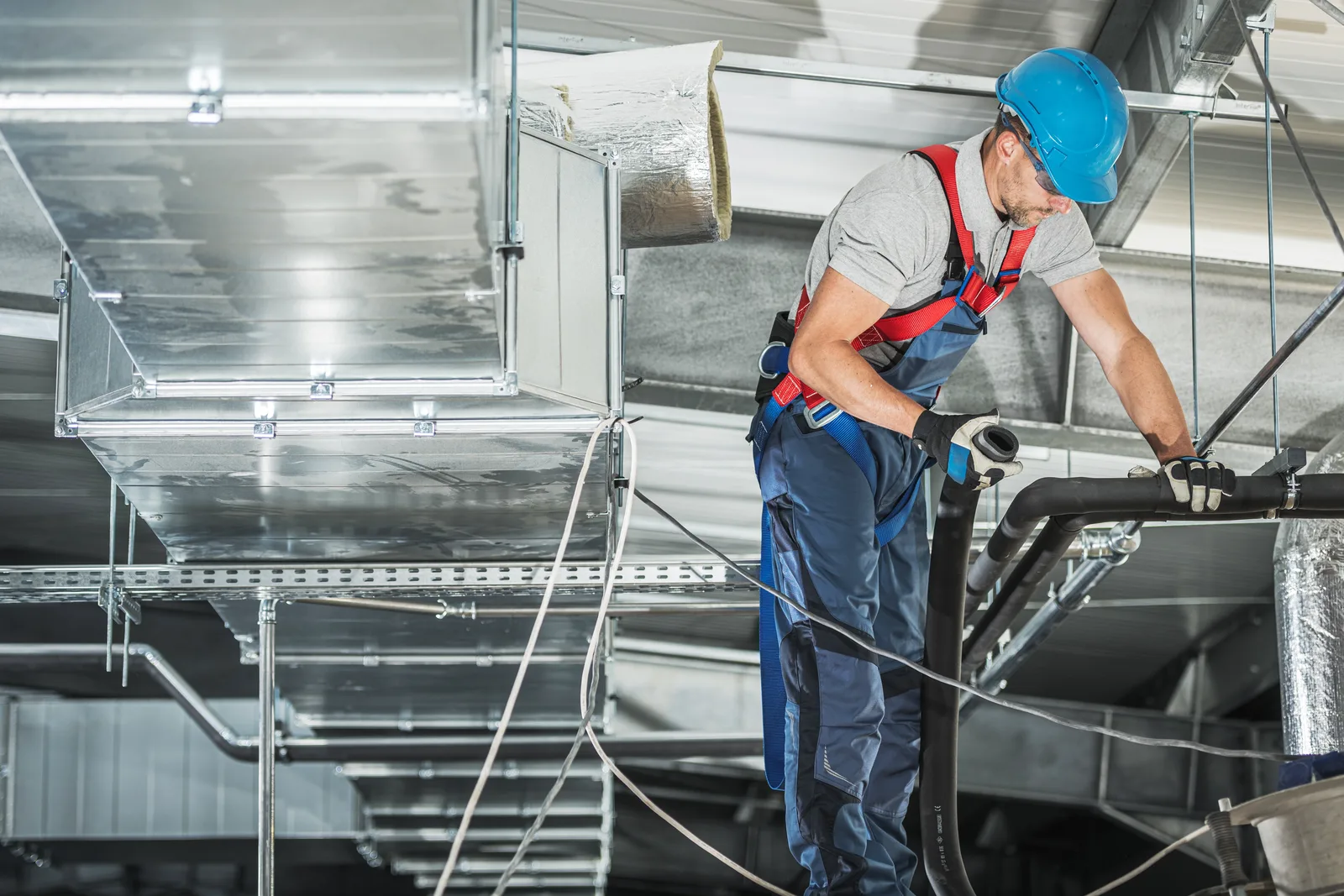
Picture the job. A rooftop unit comes off the delivery truck, the rigging crew sets the slings and the spreader bar, the crane operator takes the load, and the unit rises past the parapet to the curb where your crew is waiting to set it. For the minutes that unit is in the air, it is property of others — usually the customer’s, sometimes a supplier’s — and it is in your care. A slipped sling, a shifted load, a unit that swings into the building or comes down hard on the curb, and you are looking at serious damage to expensive equipment while it was under your control.
That window — the load in the air, in your care — is the riggers-liability exposure. It is short in time and large in dollars, which is the worst combination a coverage gap can have: it does not happen often, so it is easy to assume it is covered, and when it does happen the loss is real. The exposure is concentrated in commercial rooftop work because that is where the crane comes in. A contractor who lifts and sets units with a crane, a boom, or a hoist carries this exposure on every such job, whether or not the coverage that answers it is in place.
Why general liability usually does not answer the rigged load
Here is the seam, and it is the part contractors misread most. General liability is built to answer third-party bodily injury and property damage — but it carries standard exclusions for property in your care, custody, or control, and for property that is being moved, lifted, or rigged. The rooftop unit hanging from the crane is squarely both: it is in your care, and it is being lifted. So when a unit is dropped or damaged during the lift, general liability commonly does not reach it, because the policy was never designed to cover the property you are hoisting.
This is consistent with how the completed operations post frames general liability: it answers the third-party loss your work causes — a fire traced to a bad connection, a carbon-monoxide claim, a flooded ceiling — not the property in your hands while you work on it. The rigged unit is in your hands, mid-lift, which is exactly the kind of in-your-care property general liability sets aside. The damage the dropped unit might do to the building or a bystander can be a general-liability question; the damage to the unit itself while you were lifting it usually is not. That distinction is the whole reason riggers liability exists.
What riggers liability covers
Riggers liability fills that gap directly. It is an inland-marine coverage — frequently an endorsement rather than a standalone policy — that responds to physical loss of or damage to property of others while it is being lifted, rigged, hoisted, or moved by you. On an HVAC job that is the rooftop unit during the crane set: from the point you take the load up to the point the unit is placed and released, the rigged-load exposure is what riggers liability is built to answer.
A few boundaries keep it from being misread. Riggers liability is about the load, the property of others being lifted — not the crane, which is often a rented or subcontracted machine carrying its own coverage, and not your owned rigging hardware like slings, shackles, and spreader bars, which is typically your contractors equipment. And the trigger is tied to the rigging operation: broadly, the coverage responds while the property is in your care during the lift, with the precise start and stop language varying by carrier. Forms, endorsements, and terms vary, so confirm exactly what your policy names and when it considers the rigging operation to begin and end.
Where riggers liability sits among your other coverages
It helps to place riggers liability against the coverages it sits beside, because the names overlap and the property does not. Contractors equipment is first-party coverage on the tools and gear you own and carry — recovery machines, gauges, vacuum pumps, hand tools, and your own slings and shackles; that exposure and how it differs from the coverage on units you install is laid out in contractors equipment vs installation floater. General liability answers third-party injury and property damage your work causes. Riggers liability is the narrow piece between them: your liability for property of others while you are lifting it.
So on a single rooftop job, several coverages can be in play at once without overlapping. Your contractors equipment stands behind your own gear and rigging hardware. Your general liability stands behind injury to a bystander or damage to the surrounding building. And riggers liability stands behind the unit itself while it hangs from the crane. The mistake is to assume any one of them covers the rigged load by default — only riggers liability is built for it, and only if it is actually on your policy. Confirm what you carry rather than assuming the lift is covered somewhere.
How to check your own policy
The seam turns into a short list to confirm before your next crane day — the actionable part of this post. Forms, endorsements, and terms vary by carrier, so confirm what your policy actually names:
- Confirm riggers liability is in place if you set units with a crane. This is the headline check: general liability alone usually leaves the rigged load exposed, so a commercial installer doing rooftop work confirms this coverage deliberately.
- Read your general-liability care-custody-control and rigging exclusions. Confirm with your own form that property being lifted or moved is excluded, so you understand exactly the gap riggers liability is filling.
- Check what the riggers coverage names — the load, not the crane. Confirm it covers property of others during the lift, and understand that the crane and your owned rigging hardware are usually addressed elsewhere.
- Read the start and stop of the rigging operation. Confirm when your policy considers the lift to begin and end, since that trigger language varies by carrier.
- Match the coverage to your real work. If you never lift or rig, this may not earn its place; if rooftop crane sets are routine, it is one of the more important coverages you carry. Read it against what you actually do.
Confirm the coverage before the load leaves the ground
The rooftop crane lift is short, routine, and expensive to get wrong, and the unit in the air is exactly the property general liability sets aside. If you set rooftop units with a crane, treat riggers liability as a coverage to confirm before the load leaves the ground, read your general-liability exclusions so you can see the gap it fills, and keep it consistent with the rest of your inland-marine program rather than assuming the lift is covered somewhere. The coverages around it are close by: the working-assets side runs to contractors equipment, the comparison with the coverage on units you install is in contractors equipment vs installation floater, the most common inland-marine loss is covered in does insurance cover tools stolen from my van, and the liability framing that keeps the rigged load off general liability is in the completed operations post. When you are ready, start a quote, read how commercial HVAC contractor coverage fits together, or step back to what drives HVAC insurance costs to see where it sits in the program.