States we serve · North Carolina
North Carolina HVAC contractor insurance
North Carolina licenses HVAC contractors through its own State Board of Examiners of Plumbing, Heating and Fire Sprinkler Contractors — heating groups one, two and three, each in Class I for all structures or Class II for single-family houses — and its comp act makes a contractor who sublets work without first collecting the sub’s insurance certificate liable for the sub’s injured workers, however small the sub. We write general liability, workers compensation, commercial auto, contractors equipment and umbrella around those rules, from Charlotte, Raleigh and Durham to Greensboro, Winston-Salem and Fayetteville.

North Carolina does not fold HVAC into a general contractor board. Under Article 2 of chapter 87 of the General Statutes, the State Board of Examiners of Plumbing, Heating and Fire Sprinkler Contractors licenses heating contractors by group — group one for steam and hot-water comfort heating, group two for larger air systems with mechanical refrigeration, group three for smaller duct-and-air systems and every single-family residence — and by class, Class I covering all structures and Class II covering single-family detached dwellings. The license number has to appear on every proposal, contract and permit request. Workers’ comp adds a rule that shapes how a North Carolina shop subcontracts: section 97-19 makes a contractor who sublets work without first obtaining the sub’s insurance certificate liable for the sub’s injured employees, even if the sub has fewer employees than the comp act’s general threshold. The housing points the work at heat pumps: Census data show electricity heating a far larger share of North Carolina homes than nationally, manufactured homes a far larger share of the housing, and a median home newer than the national one. This page covers the board’s license grid, the certificate rule, the risk picture and the North Carolina markets we place.
North Carolina HVAC insurance costs
North Carolina HVAC insurance is priced from your operation, not from a statewide rate card. For the drivers an underwriter weighs and how to get an accurate quote, see our guide to how much HVAC insurance costs in North Carolina.
Heating group one, two or three, Class I or II: North Carolina’s HVAC license grid
Section 87-21 defines the heating groups by the system, not the job title. Heating group number one is a building’s comfort heating by high- or low-pressure steam, vapor or hot water, with its piping, ducts and equipment. Heating group number two is an integral air system for heating or cooling a building, with mechanical refrigeration capacity above the statute’s tonnage line. Heating group number three is a direct heating or cooling system that moves heat through ducted air with refrigeration capacity at or below that line — and systems installed in single-family residences fall in group three regardless of size. Across the groups, the board issues Class I licenses covering all structures and Class II licenses covering single-family detached residential dwellings, plus restricted licenses such as a fuel piping license for running fuel lines from an approved source to appliances inside the premises. The board sets the experience and examination standards for each class, and a license must be in hand before anyone engages in, or offers to engage in, heating contracting for pay. Once licensed, the contractor posts the license at its place of business, and its number goes on every proposal, contract and municipal permit request; the initial qualified licensee holds that number, which can pass only to a qualified licensee the statute allows. Refrigerant handling is a separate federal credential; our guide to EPA 608 certification as a business asset explains what it does for a shop. The insurers writing North Carolina HVAC policies are regulated by the North Carolina Department of Insurance (NCDOI).
Get the certificate before you sublet: North Carolina’s section 97-19 rule
North Carolina’s comp act covers private employment in which three or more employees are regularly employed in the same business, under section 97-2. Section 97-19 reaches past that line for anyone who subcontracts. A principal contractor, intermediate contractor or subcontractor who sublets work without obtaining a certificate from a comp insurer, or a Department of Insurance certificate of compliance for a self-insured sub, is liable for the sub’s employees injured on that work as if the sub were covered by the act — whether or not the sub regularly has fewer than three employees. Obtaining the certificate before subletting ends that liability for the term it shows. The statute adds two protections: no liability if the sub in fact had a compliant policy in force on the date of injury, even if the certificate came late, or if the policy lapsed or was cancelled after a certificate was obtained before subletting and the contractor did not know. A contractor who pays can recover from anyone independently liable, the Industrial Commission sets the order in which liable parties pay starting with the immediate employer, and an owner or principal may cover its contractors under a blanket policy. Section 97-19 makes that certificate the document to collect before a sub starts; our workers compensation page explains how a policy pays.
Electric heat pumps and manufactured homes across the Piedmont: North Carolina’s HVAC exposure
NOAA’s normals for Charlotte Douglas International Airport put the heating load above the cooling load, with a cooling load large enough to make summer a full air-conditioning season, so a Piedmont book runs heat pumps hard in both directions. Census data show electricity heating a far larger share of North Carolina homes than it does nationally and utility gas a far smaller one, which puts heat pumps, air handlers, auxiliary heat strips and their electrical connections at the center of residential work, while bottled propane, slightly more common than nationally, adds fuel piping and appliance venting where it is used. Manufactured homes make up a far larger share of North Carolina housing than nationally, so crews work in belly ducts and crawlspace connections as well as the attics of detached houses, and the housing is newer than the national median. Across the Piedmont’s humid summers, crawlspace duct and condensate work is where water losses start. The diagram ties those exposures to the coverage that responds — heat-pump, duct and fuel-piping work that fails later under general liability, gauges and recovery machines under contractors equipment, technicians in crawlspaces and on rooftops under workers compensation, and service vans on the interstates between Charlotte, the Triad and the Triangle under commercial auto.
North Carolina Seasonal Market
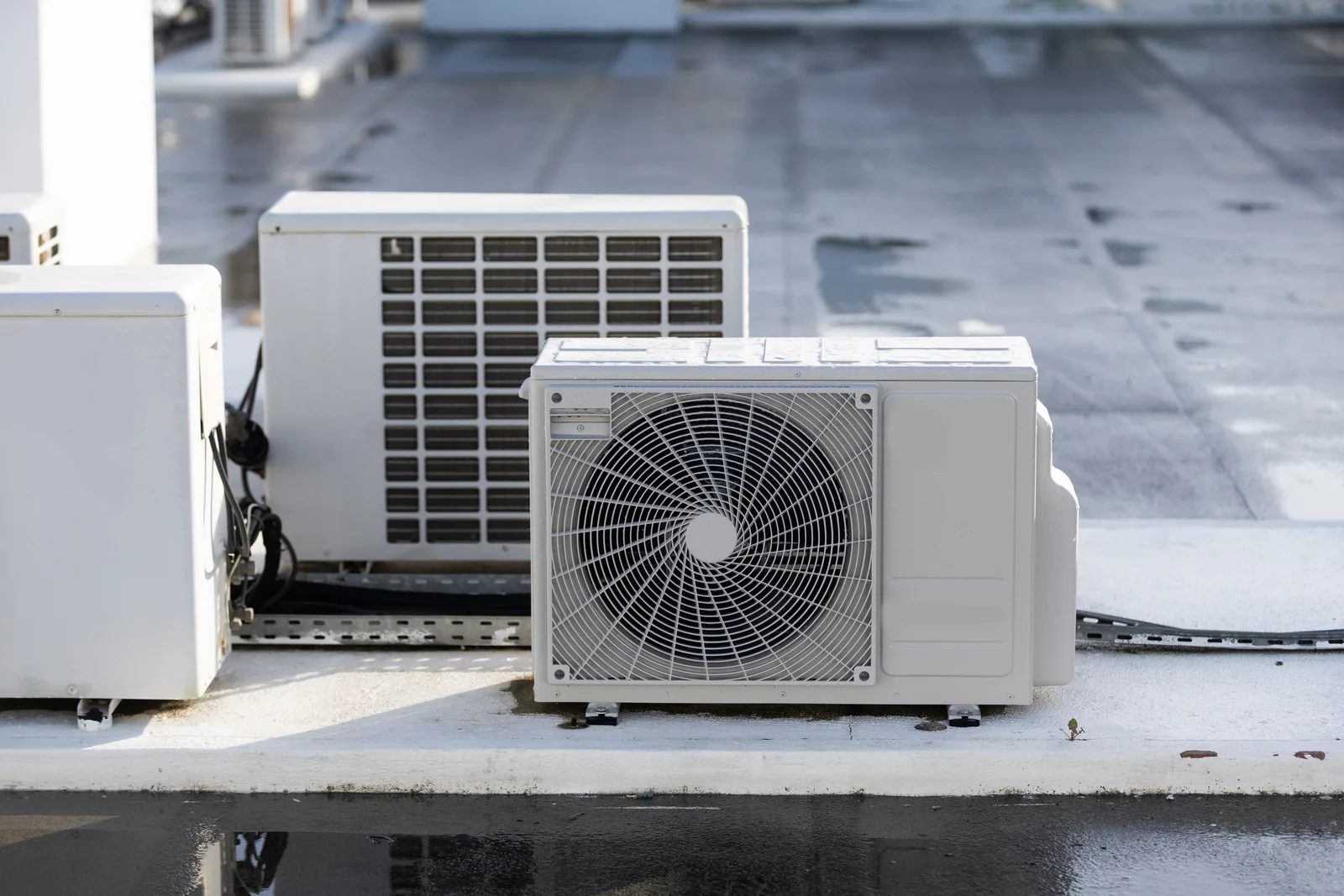
North Carolina pairs hot, humid summers across the Piedmont and Coastal Plain, with long air-conditioning seasons and heavy heat-pump work, with a real heating season statewide that runs colder in the mountains.
The honest framing: North Carolina is not one climate. Hot, humid summers across the Piedmont and the Coastal Plain drive long air-conditioning seasons and heavy heat-pump work, while the cooler mountain west still carries a genuine heating workload through the winter. That spread is why we weight each operation’s coverage to where and how it actually works rather than to a statewide average.
North Carolina losses on heat-pump, duct and fuel-piping jobs
These are the North Carolina losses our programs are built to carry.
- A crawlspace duct that separates under a Greensboro house — humid air and condensate soak the subfloor after the job, a completed-operations claim under general liability.
- A heat pump’s auxiliary heat connection that overheats in a Raleigh attic — a fire after a winter service call lands on completed operations too.
- A propane line run under a section 87-21 fuel piping license that leaks at a rural manufactured home outside Fayetteville — the fire or carbon-monoxide exposure is again general liability’s completed operations.
- A duct sub’s helper hurt on your Charlotte job when you never collected the sub’s certificate — section 97-19 makes the injury your workers compensation claim, even though the sub fell below the comp act’s employee threshold.
- A van crash on the way to a Winston-Salem or Durham call — the other driver’s injuries go to commercial auto, and a recovery machine stolen from the van is a contractors equipment loss.
License number, heating group and sub certificates: our North Carolina setup
We write the policy to the license: the heating groups and the Class I or Class II status the board has issued, any restricted fuel piping license, and the licensee whose number goes on your proposals and permit requests, so the named insured and the description of operations match what a municipal inspector and a general contractor see. For subcontracting, we build the file section 97-19 rewards — a current certificate from each duct, electrical and startup sub collected before the work is sublet — and track expiration dates so a lapse does not turn into your claim. For commercial group two work and the VRF and VRV systems that go with it, we confirm completed operations reaches refrigerant piping and controls work and add an umbrella where a Charlotte or Raleigh commercial contract asks for higher limits.
Major North Carolina HVAC Markets
North Carolina is not one market — it spans the fast-growing Charlotte region, the Research Triangle, the Piedmont Triad, and the Coastal Plain, each with its own cooling load and service mix. These are the major HVAC submarkets we place across.
Charlotte
The state’s largest metro pairs a hot, humid cooling season with rapid growth, driving heavy residential replacement-and-service work and a deep commercial and mechanical base. New-construction and rooftop-unit work across the suburbs keeps crews busy across a long cooling calendar.
Raleigh
A fast-growing Research Triangle hub where new residential development and commercial build-out drive both install and service demand. Hot, humid summers sustain air-conditioning and heat-pump load across the metro.
Greensboro
A Piedmont Triad center with a steady residential service base and commercial and light-industrial mechanical work. The long, humid cooling season keeps air-conditioning and heat-pump work active most of the year.
Durham
A Triangle city where university, medical, and research facilities anchor commercial mechanical demand alongside a growing residential service market. Hot, humid summers drive a sustained cooling load.
Winston-Salem
A Piedmont metro with a residential replacement market and commercial and institutional mechanical work. Humid summers keep cooling and heat-pump service at the center of the calendar.
Fayetteville
A Sandhills market with residential service demand and commercial and institutional work tied to the regional base. The long, hot cooling season anchors air-conditioning field activity.
North Carolina is one of the 48 states we are licensed in. As each state page comes online you can compare licensing, season, and market conditions across every state we serve.
North Carolina reading for heating-group licensees and VRF specialists
Begin with workers compensation and what general contractors require from HVAC subs, because section 97-19 makes the sub’s certificate part of your own protection. Crawlspace ductwork makes condensate water damage a North Carolina loss to understand, and completed-operations coverage explains the line that answers it. Commercial VRF and VRV work under a group two license makes what commercial HVAC clients require and refrigerant leak coverage worth reading. Class II residential shops fit residential HVAC contractor insurance, Class I commercial contractors fit commercial HVAC contractor insurance, and a Charlotte shop working into South Carolina can compare states through the states we serve index.
North Carolina HVAC Insurance FAQs
What does HVAC insurance in North Carolina need to cover for a heating group licensee?
General liability with completed operations for the heat-pump, duct and fuel-piping work your heating group license allows, workers compensation — including the exposure section 97-19 creates when you sublet — commercial auto, contractors equipment for gauges and recovery machines, and an umbrella for larger commercial contracts. With electricity heating a far larger share of North Carolina homes than nationally, heat-pump and air-handler work is where a residential program is tested, and the named insured should match the license number on your permits.
Which North Carolina heating group covers VRF and VRV system work?
Section 87-21 sorts heating licenses by the system: group two is an integral air system with mechanical refrigeration capacity above the statute’s tonnage line, group three covers smaller ducted systems, and any system in a single-family residence falls in group three regardless of size. Where a particular VRF or VRV installation lands turns on those tests, and a commercial installation may call for a group two license. On the insurance side, we confirm completed operations reaches refrigerant piping and controls work on a group two VRF job and add an umbrella for commercial contracts.
Can a North Carolina Class II heating licensee work on commercial buildings?
No. Section 87-21 limits Class II licenses to plumbing and heating systems in single-family detached residential dwellings; Class I covers all structures. A shop that wants apartment, retail or office work needs Class I in the right heating group, and its policy description and certificates should reflect that broader work.
Does a North Carolina HVAC shop with fewer than three employees need workers’ comp?
Section 97-2 applies the comp act to private employment with three or more employees regularly employed, so a very small shop may fall below the line. But section 97-19 makes any contractor who sublets work to you liable for your employees’ injuries if it did not collect your insurance certificate first — regardless of your headcount — so the general contractors you work for will ask for one. That makes a comp policy part of the price of getting North Carolina subcontract work.
What happens under section 97-19 if I sublet duct work without the sub’s certificate?
You become liable for the sub’s employees injured on that work, as if the sub were covered by the comp act, whether or not it regularly has fewer than three employees. You are protected if you obtained a certificate from its comp insurer, or a Department of Insurance certificate for a self-insured sub, before subletting; if the sub actually had a compliant policy in force on the date of injury; or if its policy lapsed after you collected a certificate and you did not know. Section 97-19 then lets you recover what you pay from anyone independently liable.
Where does my North Carolina heating license number have to appear?
Section 87-21 requires the current license to be posted at your place of business and its number to appear on all proposals, contracts and requests for municipal permits. We use the same license holder and number when we set up the named insured and the certificates, so a general contractor or inspector comparing your paperwork sees one consistent North Carolina business.
Get a North Carolina HVAC insurance quote
Tell us how your North Carolina operation works — residential service, commercial and mechanical, or both — and we will market it to carriers that write the class.