States we serve · Pennsylvania
Pennsylvania HVAC contractor insurance
Pennsylvania has no statewide HVAC license, but a municipality cannot issue a building permit to a contractor until it sees proof of workers’ comp or an affidavit that none is required, and residential heating and air-conditioning installers must register with the Attorney General with proof of liability insurance. We insure Pennsylvania HVAC shops for liability — the coverage the Attorney General’s registry asks you to prove — plus comp, vehicles, tools and umbrella limits, for housing much older than the national median and heated with fuel oil at several times the national rate.

Pennsylvania answers the licensing question with an accurate negative: the Commonwealth issues no statewide HVAC or mechanical contractor license, and cities such as Philadelphia and Pittsburgh set their own requirements. The state’s leverage comes through other laws. The Workers’ Compensation Act makes proof of comp a condition of every building permit issued to a contractor and bars subcontracting to anyone who cannot show it; the Construction Workplace Misclassification Act sets a strict test before a construction worker can be treated as an independent contractor; and the Home Improvement Consumer Protection Act requires contractors installing central heating or air conditioning at private residences to register with the Attorney General and prove liability insurance. The housing is much older than the national median, and Census data show fuel oil heating several times the national share of Pennsylvania homes. This page covers section 302 and Act 72, the home improvement registration, the oil-and-old-housing risk picture, and the Pennsylvania markets from Philadelphia to Pittsburgh.
Pennsylvania HVAC insurance costs
Pennsylvania HVAC insurance is priced from your operation, not from a statewide rate card. For the drivers an underwriter weighs and how to get an accurate quote, see our guide to how much HVAC insurance costs in Pennsylvania.
Permits, subcontractors and misclassification: Pennsylvania’s comp rules for contractors
Comp in Pennsylvania is bought from private insurers rather than an exclusive state fund, and section 302 of the Workers’ Compensation Act puts it in front of HVAC work at two points. Under section 302(e), a municipality must require a contractor to present proof of workers’ comp — or an affidavit that it employs no one else and is not required to carry comp — before issuing a building permit, and the permit itself sets out the contractor’s comp policy and employer identification number. Under section 302(d), a contractor may not subcontract any part of a contract unless the subcontractor has presented proof of insurance under the Act. The Construction Workplace Misclassification Act, Act 72 of 2010, then decides who counts as an independent contractor in the construction industry: only an individual with a written contract, free from control over the work, and customarily engaged in an independent business — which the Act tests by asking whether the individual owns the essential tools, can profit or lose, has a proprietary interest and a separate business location, and maintains liability insurance. An HVAC shop that pays installers as independent contractors without meeting that test is carrying them as employees for workers compensation purposes.
No state HVAC license: Pennsylvania’s registration and local licensing
There is no statewide HVAC or mechanical contractor license in Pennsylvania; HVAC licensing is handled at the municipal level, with Philadelphia and Pittsburgh imposing their own requirements. The Pennsylvania Insurance Department (PID) supervises the carriers on the private side of the program.
Home improvement registration for residential heating and cooling work
The Home Improvement Consumer Protection Act defines home improvement to include, without regard to affixation, the installation of central heating and air conditioning at a private residence, and it bars anyone from performing home improvement without first registering with the Bureau of Consumer Protection in the Office of Attorney General. Registration requires proof of liability insurance for personal injury and for property damage caused by the contractor’s work, and every home improvement contract must carry the contractor’s registration number and state the insurance the contractor maintains when the contract is signed. New-home construction and contractors below the Act’s small annual-volume threshold fall outside it. It is a registration, not a trade license — a point the Act itself makes by leaving existing trade licensing standards and local liability-insurance rules in place.
Refrigerant certification still applies
No Pennsylvania registration or city license replaces federal EPA Section 608 certification for a technician who handles refrigerant. Our guide to EPA 608 certification as a business asset covers the federal side.
Pennsylvania Seasonal Market
Pennsylvania is a four-season Mid-Atlantic and Northeast market with hot, humid summers and cold, snowy winters, producing strong demand for both air conditioning and heating service throughout the year.
The honest framing: Pennsylvania is a four-season Mid-Atlantic and Northeast market, so HVAC demand is genuinely dual — hot, humid summers keep air-conditioning install, replacement, and service busy, and cold, snowy winters keep furnaces, boilers, and heating systems in heavy work. That balance is why we weight each operation’s coverage to how it actually splits between heating and cooling and between residential and commercial work rather than to a statewide average.
Oil burners and old housing: what drives Pennsylvania HVAC risk
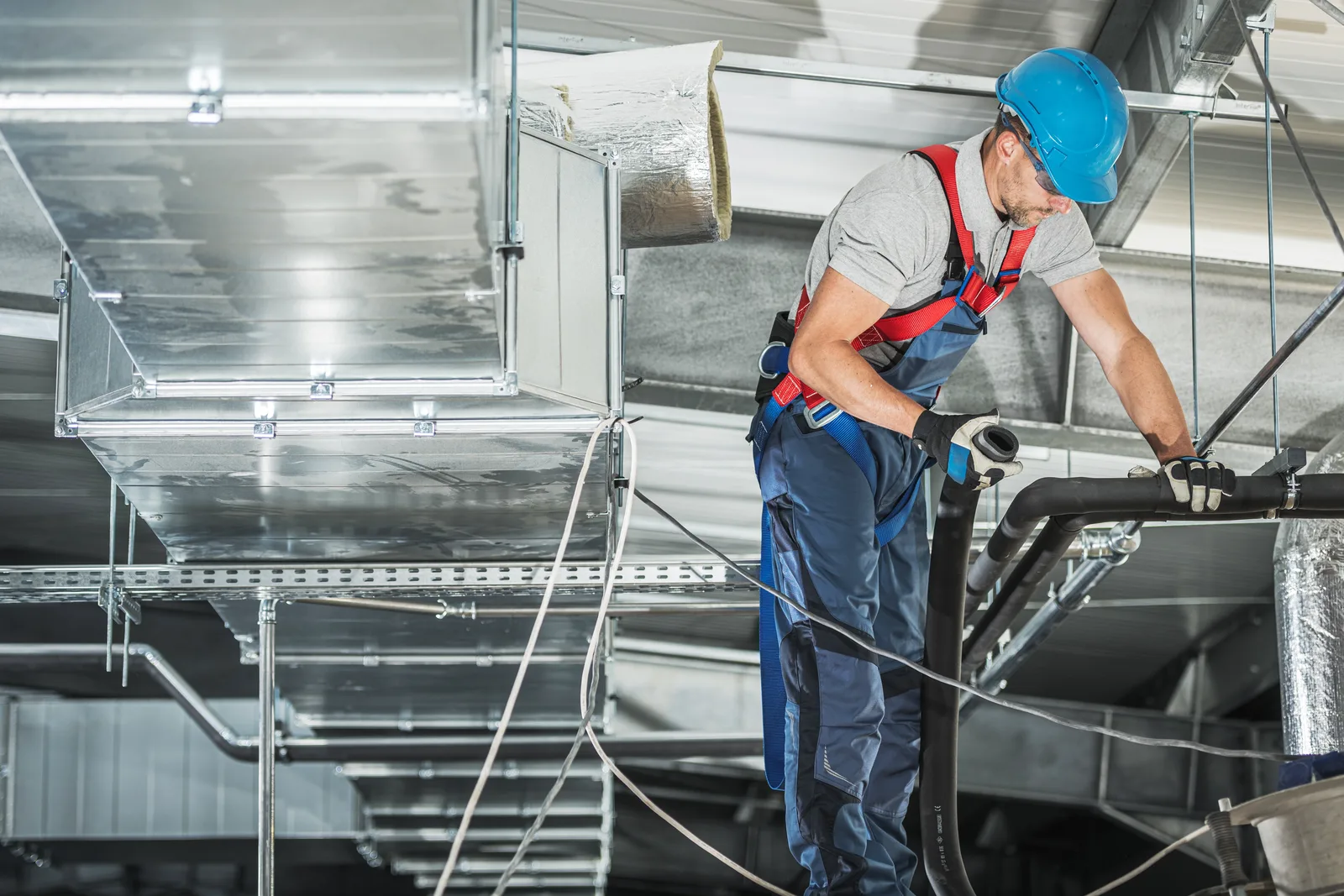
NOAA’s climate normals for Allegheny County Airport near Pittsburgh put Pennsylvania’s heating load at several times its cooling load, and the homes that load runs through are old: Census data put the median Pennsylvania home much older than the national one, with detached houses a smaller share of the stock than nationally. Utility gas heats a little more than the national share of homes, but fuel oil heats several times the national share and wood more than the national share, while electric heat sits well below it. That mix puts Pennsylvania HVAC risk in oil burners, tanks and flues and in gas boilers and furnaces inside older buildings, where a burner that puffs back or a vent left wrong damages more than the mechanical room. Humid summers still keep air-conditioning and heat-pump work on the calendar from Philadelphia to Harrisburg. Set against the diagram, Pennsylvania’s exposures resolve to the policies that respond: oil-burner and boiler work that fails goes to general liability, stolen gear to contractors equipment, an installer hurt in an old basement — or a misclassified one — to workers compensation, and a van on winter roads to commercial auto.
Pennsylvania HVAC claims we prepare for
Oil heat, older housing and comp rules that reach every permit and every subcontract shape the Pennsylvania losses we plan around.
- Soot after an oil-burner service call — a burner adjusted in an oil-heated Scranton or Allentown house puffs back after the crew leaves, a completed-operations claim under general liability.
- A boiler repair that fails in an old building — a no-heat fix in a Philadelphia or Pittsburgh building fails in a cold snap and frozen pipes damage the floors below, again general liability, with the umbrella above it.
- An installer who was not really independent — a subcontracted installer who fails the Act 72 test is hurt on a job, and the injury becomes the hiring shop’s workers compensation.
- Gear taken from a van in Harrisburg — gauges and a recovery machine stolen overnight, a contractors equipment loss.
- A winter crash near Erie, Pennsylvania — a loaded service van at fault on snowy winter roads, the third-party commercial auto exposure.
Pennsylvania HVAC programs, built job by job
With no state license to anchor the program, we anchor it to the documents Pennsylvania actually checks. We issue comp certificates for every building permit, collect certificates from your subcontractors before they start as section 302(d) requires, and review any installer paid as an independent contractor against the Act 72 test. For residential replacement work, we make sure your liability coverage matches the proof on file with the Attorney General’s home improvement registry and the insurance statement in your contracts. For commercial work in Philadelphia and Pittsburgh, we confirm each city’s own licensing before you mobilize and set umbrella and additional-insured terms to what general contractors require, and we write completed-operations coverage sized for oil-burner and boiler work in Pennsylvania’s older housing.
Major Pennsylvania HVAC Markets
Pennsylvania is not one market — it is a dense eastern metro, a western river-valley city, a logistics-heavy Lehigh Valley, an institutional capital region, and lakeshore and northeastern communities, each with its own mix of residential service and commercial and mechanical work. These are the major HVAC submarkets we place across.
Philadelphia
The state’s largest city anchors a dense urban service-and-replacement market alongside heavy commercial, institutional, and high-rise mechanical work. Aging building stock and a deep commercial base keep both maintenance and changeout crews working through every season, with the city setting its own local licensing requirements.
Pittsburgh
A river-valley metro with corporate, medical, university, and industrial buildings driving substantial commercial and mechanical work. A large residential service base keeps changeout and repair work steady, and the city administers its own local licensing.
Allentown
A Lehigh Valley hub where logistics, warehousing, and commercial development drive mechanical and refrigeration work. A growing residential base keeps service and replacement work steady across the four-season calendar.
Harrisburg
The state capital pairs government, institutional, and commercial building-systems work with a residential service market across the surrounding metro. Four-season demand keeps both heating and cooling crews active year-round.
Erie
A lakeshore city with manufacturing, institutional, and commercial buildings driving mechanical work. Cold, snowy lake-effect winters drive heavy heating and boiler demand alongside a steady residential service base.
Scranton
A northeastern-Pennsylvania city blending older building stock with newer development, sustaining both residential service-and-replace and commercial mechanical work. Cold winters drive strong heating demand across the season.
Pennsylvania is one of the 48 states we are licensed in. As each state page comes online you can compare licensing, season, and market conditions across every state we serve.
Reading for Pennsylvania heating and cooling shops
Because every Pennsylvania permit asks for it, start with workers compensation and what general contractors require from HVAC subs, then general liability and completed-operations coverage for the oil burners and boilers you leave behind. With fuel oil heating several times the national share of homes, Pennsylvania oil-burner and gas venting work makes how carbon-monoxide claims are handled worth reading. Residential oil and gas heat service registered under the home improvement law fits residential HVAC contractor insurance, and Philadelphia and Pittsburgh commercial mechanical work fits commercial HVAC contractor insurance; compare Pennsylvania’s no-license approach with licensing states on the states we serve index.
Pennsylvania HVAC Insurance FAQs
Does Pennsylvania license HVAC contractors, or only register them?
Not statewide. Pennsylvania has no state HVAC or mechanical contractor license; cities such as Philadelphia and Pittsburgh set their own requirements. Contractors installing central heating or air conditioning at private residences must register with the Attorney General under the Home Improvement Consumer Protection Act, which is a registration rather than a trade license, and technicians who handle refrigerant need federal EPA Section 608 certification.
What insurance does the Pennsylvania home improvement law require of an HVAC contractor?
The Home Improvement Consumer Protection Act requires proof of liability insurance for personal injury and for property damage caused by the contractor’s work when you register with the Attorney General’s Bureau of Consumer Protection. Each home improvement contract must also include your registration number and state the insurance you maintain at signing. Commercial work and new-home construction fall outside the Act, where general contractors set their own requirements.
Do I need workers’ comp to get a building permit in Pennsylvania under section 302(e)?
You need proof of it, or an affidavit that you employ no one else and are not required to carry it. Section 302(e) of Pennsylvania’s Workers’ Compensation Act requires a municipality to see that proof before issuing a building permit to a contractor, and the permit then lists the contractor’s comp policy and employer identification number.
Can a Pennsylvania HVAC contractor treat installers as independent contractors?
Only if they meet the Construction Workplace Misclassification Act, Act 72 of 2010. A construction worker is an independent contractor only with a written contract, freedom from control over the work, and an independently established business — shown by owning the essential tools, bearing profit or loss, holding a proprietary interest, keeping a separate business location, and maintaining liability insurance. An installer who fails that test is treated as an employee for comp purposes.
Is an HVAC protection plan in Pennsylvania the same as contractor insurance for an oil-heat shop?
No. A protection plan or maintenance agreement is a service promise to a Pennsylvania customer; contractor insurance protects your business when the work causes injury or damage, when a tech is hurt, or when your gear or van is lost. The two meet on the claim side: with fuel oil heating several times the national share of Pennsylvania homes, a plan visit to an oil burner that later puffs back is a completed-operations claim under your general liability, not something the plan pays for.
Does a Pennsylvania HVAC shop need proof of comp from its subcontractors?
Yes. Section 302(d) of the Workers’ Compensation Act bars a contractor from subcontracting any part of a contract unless the subcontractor has presented proof of insurance under the Act. Collecting the sub’s certificate before the job starts, and keeping it current, is how a Pennsylvania HVAC shop stays inside section 302(d).
Get a Pennsylvania HVAC insurance quote
Tell us how your Pennsylvania operation works — residential service, commercial and mechanical, or both — and we will market it to carriers that write the class.