
States we serve · Florida
Florida HVAC contractor insurance
Air conditioning company insurance in Florida has to satisfy the CILB before it satisfies a customer: a certified or registered air-conditioning contractor attests to workers’ comp, public liability and property damage insurance to get or renew the license, and every building permit asks for proof of comp again. We write the general liability, commercial auto, workers compensation, contractors equipment and umbrella behind those Florida affidavits and permits, in a state where electricity heats the overwhelming majority of homes and cooling load dwarfs heating.

Florida decides three things about an HVAC contractor before any insurer does. Chapter 489 of the Florida Statutes sets the license: the Construction Industry Licensing Board (CILB) at the Department of Business and Professional Regulation certifies or registers air-conditioning contractors as Class A (unlimited) or Class B (capped per system), and a general contractor on the job has to subcontract the air-conditioning work unless it holds that trade license itself. Chapter 440 sets the comp rule: in construction, a single employee brings an employer under the Workers’ Compensation Law, and section 440.103 makes proof of coverage a condition of every building permit. And Census housing data set the workload — Florida homes heat with electricity far more often than homes nationally, the housing stock is newer than the national median, and apartment buildings and mobile homes make up a larger share of it than nationally. NOAA’s normals for its Miami International Airport station show cooling degree days overwhelming heating degree days. What follows walks the CILB license, the construction comp rule, the risks and claims that come out of a year-round cooling state, and how we place Florida programs.
Florida HVAC insurance costs
Florida HVAC insurance is priced from your operation, not from a statewide rate card. For the drivers an underwriter weighs and how to get an accurate quote, see our guide to how much HVAC insurance costs in Florida.
Certified or registered: Florida’s Class A and Class B air-conditioning licenses
Florida licenses air-conditioning contractors through the Florida Department of Business and Professional Regulation (DBPR) — Construction Industry Licensing Board (CILB), and the choice between the two credential types sets where a shop may work. Under section 489.105, a certified contractor may contract in any Florida jurisdiction without meeting that jurisdiction’s own competency requirements, while a registered contractor has met a local jurisdiction’s requirements and may contract only there; section 489.117 makes a registrant report each local jurisdiction and category it holds. A Tampa shop registered locally that takes a job in Orlando is outside its license, and a policy written for one county will not fix that.
What the Class A and Class B definitions include — and leave out
The Class A air-conditioning contractor is unlimited: central air-conditioning, refrigeration, heating and ventilating systems, duct work needed to complete an air-distribution system, boiler and unfired pressure vessel systems, piping and insulation, and duct cleaning that requires partial disassembly. The Class B contractor does the same work but is capped by cooling tonnage and heating output in any one system. Both definitions let the contractor replace, disconnect or reconnect power wiring on the load side of the dedicated disconnect, repair dedicated HVAC circuits, run low-voltage control wiring and install a condensate drain to an approved disposal — and both exclude gas fuel lines inside buildings (other than appliance changeouts), potable water, sanitary sewer and pool piping. A legacy Class C service-only license survives for holders grandfathered decades ago and is closed to new applicants.
The insurance affidavit the CILB asks for
Section 489.115(5)(a) makes insurance a condition of the license itself: before a certificate or registration is first issued or renewed, the applicant files an affidavit that it has workers’ comp as Chapter 440 requires, plus public liability and property damage insurance in amounts the board sets by rule, and the board verifies a random sample of those affidavits. Carriers writing that coverage are overseen by the Florida Office of Insurance Regulation (FLOIR). The CILB license covers the business, while refrigerant handling on a Florida job still needs a federal EPA Section 608 technician — our guide to EPA 608 certification as a business asset covers that credential.
Florida’s one-employee comp rule for construction and the permit that checks it
Florida sets a lower comp threshold for construction than for other businesses. Section 440.02(20)(b) brings private employment under the Workers’ Compensation Law once an employer passes a higher headcount — but in the construction industry, one employee is enough, and the statute defines that industry to reach for-profit activity involving any building. Section 440.10 separately requires every contractor or subcontractor doing public or private construction in Florida to secure comp for its employees, and treats a subcontractor’s workers as the contractor’s own when the subcontractor has not.
Florida then checks the rule every time a building department takes a permit application: under section 440.103, an employer must show proof of coverage each time it applies for a building permit, through a carrier’s certificate of coverage, an exemption certificate approved by the Department of Financial Services, or authority to self-insure. Corporate officers in construction can elect an exemption under section 440.05, but only a limited number of officers of a corporation may do so, each must hold a qualifying ownership share, and the exemption covers the officer, never the technicians. Florida comp comes from private carriers or approved self-insurance rather than a state fund, so we place workers compensation privately and make sure the certificate names the same entity that pulls the section 440.103 permit.
A year-round cooling load and the Florida exposures that ride on it
At NOAA’s Miami International Airport station, the climate normals put the annual cooling load in a different league from the heating load, and Florida’s own housing data follow suit: electricity heats the overwhelming majority of homes, so the equipment on a Florida route is air handlers, condensers, heat pumps and strip heat rather than gas furnaces. That electric-heat profile pushes Florida losses toward water and wiring rather than combustion. A condensate drain installed under the Class A or Class B scope that clogs or disconnects in an attic sends water through a finished ceiling; a heat-pump or mini-split changeout that includes load-side wiring on the dedicated circuit brings the electrical side of the work onto the contractor’s completed operations. With apartment buildings and mobile homes both a larger share of Florida housing than nationally, work also runs into stacked condo units, where one failed line reaches a neighbor below, and into manufactured homes, where the air handler and duct runs sit in a different structure from a site-built house. Technicians work in hot attics and on roofs across a season that never really ends.
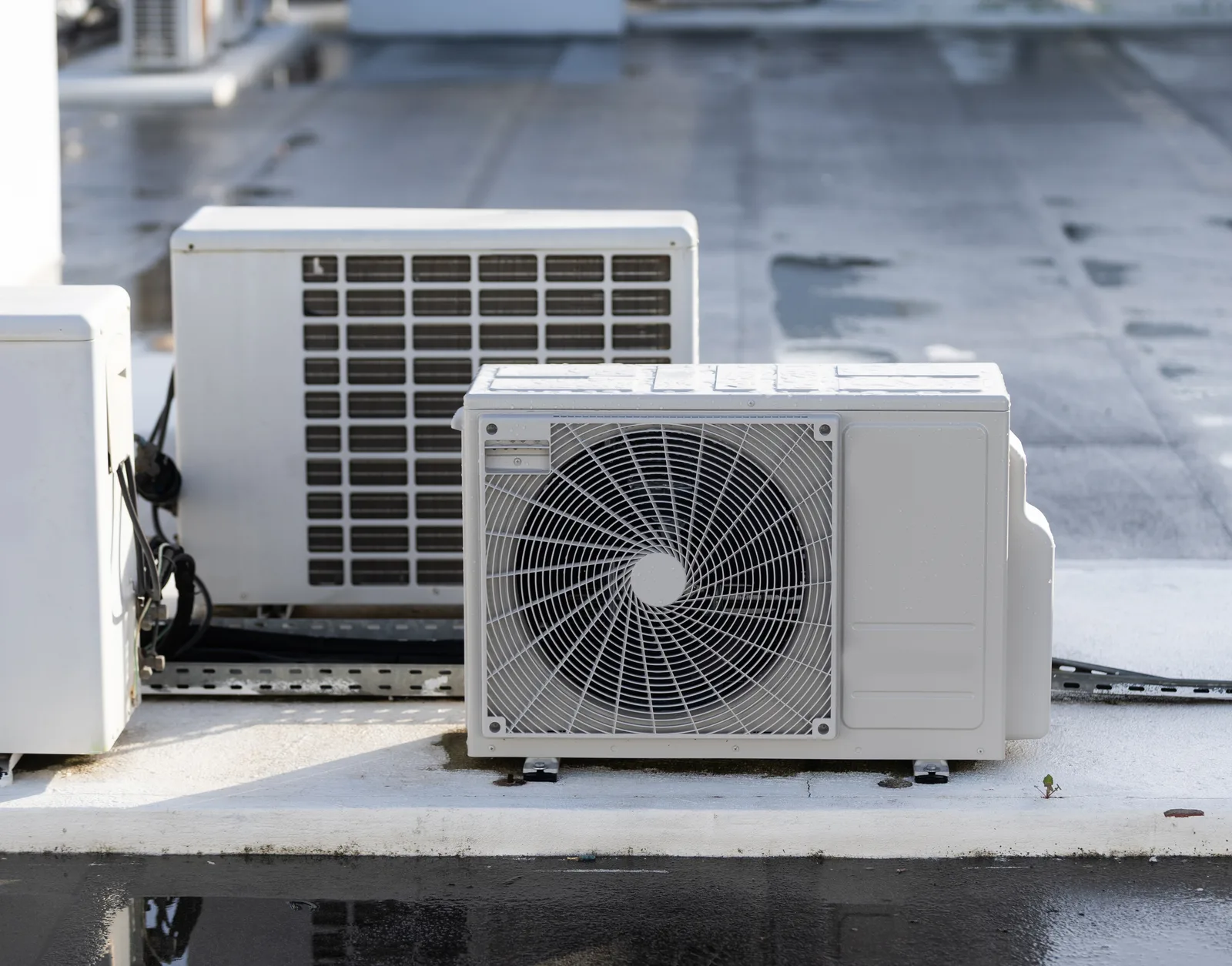
Loss files from Florida air-conditioning jobs
These are the claim types we plan around for a Florida air-conditioning contractor, each tied to a coverage line.
- A condensate overflow in a condo tower. A drain line from a Class B changeout backs up in a Miami or Fort Lauderdale high-rise unit and water reaches the units below — the completed-operations side of general liability, with the condominium association’s certificate wording in play.
- A dedicated-circuit fault after a heat-pump install. Load-side wiring reconnected under the air-conditioning license scope fails and damages the unit or the structure — again general liability, which is why the policy should describe electrical work the CILB license permits.
- A permit held up by a comp certificate. An Orlando or Jacksonville building department refuses a permit because the comp certificate names a different entity or the officer exemption does not cover the crew — a workers compensation placement problem to fix before the job, not after.
- Heat illness in an attic. A technician working an attic air handler in midsummer collapses from heat — a workers compensation claim that Florida’s construction threshold means even a one-technician shop must be ready for.
- A service van on a central or southwest Florida route, and the gear inside it. A loaded van at fault between Tampa, Orlando and Fort Myers, or recovery equipment taken from it — commercial auto for the crash, contractors equipment for the tools.
Florida Seasonal Market
Florida is the most cooling-dominant state in the Southeast, with hot, humid conditions nearly year-round driving continuous air-conditioning demand and a market weighted overwhelmingly toward AC installation, service, and replacement rather than heating.
The honest framing: Florida is the most cooling-weighted state in the Southeast, and the demand runs nearly year-round across the peninsula. The subtropical south around Miami and Fort Lauderdale carries near-continuous cooling, high-rise, and commercial refrigeration load; the Gulf and central markets around Tampa and Orlando layer hospitality and rapid residential growth onto constant air-conditioning demand; and the north around Jacksonville still runs a long, heat-driven cooling season. That near-uniform cooling load is why we weight each operation’s coverage to the way it actually works across the state.
Why Florida air-conditioning contractors bring us the CILB affidavit and the permit file together
In Florida the paperwork is part of the coverage. We write the liability limits the CILB rule requires for the affidavit under section 489.115, confirm whether the license is certified statewide or registered to particular jurisdictions before a program is quoted for work across county lines, and describe operations the way the Class A or Class B definition does — including load-side wiring and condensate drains — so the policy and the license say the same thing. On comp, we place a private policy for a shop with even one employee, or sort out a section 440.05 officer exemption where it genuinely applies, and turn certificates around fast enough for the next building permit. For Class A shops on commercial refrigeration and chiller work in Miami or Tampa, we size the umbrella to what the general contractor’s subcontract demands.
Major Florida HVAC Markets
Florida is not one market — it spans a subtropical south, a hospitality-driven Gulf and central belt, and a large north-Florida metro, all carrying near-continuous cooling demand. These are the major HVAC submarkets we place across.
Miami
A subtropical metro with near-continuous cooling demand and heavy commercial refrigeration, hospitality, and high-rise mechanical work. Dense residential and commercial growth keeps install and service crews in the field year-round.
Orlando
A fast-growing central-Florida market where hospitality, commercial, and residential development drive constant cooling demand. Year-round heat and humidity sustain air-conditioning install and service across the metro.
Tampa
A Gulf-coast metro where intense heat, humidity, and salt-air exposure push near-continuous cooling and commercial refrigeration demand. Strong residential and commercial growth keeps crews busy across the calendar.
Jacksonville
A large north-Florida metro with a deep residential service base and commercial and mechanical work. Hot, humid conditions drive a long, near year-round air-conditioning season.
Fort Lauderdale
A coastal Broward market with high-rise, hospitality, and commercial cooling demand layered onto residential service. Subtropical heat and humidity drive a continuous air-conditioning load.
Fort Myers
A southwest-Florida market with rapid residential and commercial growth and near-continuous cooling demand. Year-round heat and coastal humidity keep install and service crews in the field.
Florida is one of the 48 states we are licensed in. As each state page comes online you can compare licensing, season, and market conditions across every state we serve.
Before your next Florida permit: further reading
Florida air-conditioning losses are mostly water and electrical, so start with whether general liability covers water damage from a failed condensate line and completed-operations coverage for work left behind in condos and attics. Contractors subcontracting under a Florida general contractor should read what general contractors require from HVAC subs, and a shop building the comp certificate every permit needs can start with the HVAC workers’ comp class code. By operating model, see residential HVAC contractor insurance for split-system and heat-pump changeouts and commercial HVAC contractor insurance for Class A commercial work; to compare Florida’s CILB system with other states, use the states we serve index.
Florida HVAC Insurance FAQs
What insurance does the CILB require before it issues or renews a Florida air-conditioning license?
Section 489.115(5)(a) of the Florida Statutes requires an affidavit, at initial issuance and at every renewal of a certificate or registration, that the applicant has workers’ comp as Chapter 440 requires plus public liability and property damage insurance in amounts the Construction Industry Licensing Board sets by rule. The board checks a random sample of affidavits, so the policy in force should match what was sworn to. We write the liability side to the board’s rule and place the comp.
What should air conditioning company insurance cover for a Florida Class A or Class B contractor?
It should cover the work the CILB license allows. Florida’s Class A and Class B definitions include central air-conditioning, refrigeration, heating and ventilating systems, duct work, condensate drains and load-side wiring on dedicated HVAC circuits, so general liability with completed-operations coverage should describe that scope. Add commercial auto for the vans, contractors equipment for recovery machines and gauges, workers’ comp under Florida’s construction threshold, and an umbrella sized to general-contractor subcontracts.
Can a registered Florida air-conditioning contractor take jobs in Orlando, Stuart or Naples?
Only in the jurisdictions its Florida registration names. Under section 489.105 a registered contractor has met one jurisdiction’s competency requirements and may contract only in that jurisdiction, while a certified contractor may contract anywhere in Florida. A shop registered in one county that wants work in Orlando, Stuart or Naples needs the matching local registration or a state certificate — and its policy should list the territory the license actually permits.
Does a Florida heat-pump or mini-split installer need different coverage from a central-air contractor?
The lines match; what changes is how the policy describes the load-side wiring Florida’s license scope allows. With electricity heating the overwhelming majority of Florida homes, heat-pump and ductless work is central to the market, and those installs involve reconnecting power on the load side of the dedicated disconnect — work the Class A and Class B definitions permit. General liability should name that electrical scope so a wiring fault after the job is not argued as outside the operations described.
Does a Florida HVAC business with one employee need workers’ comp?
Yes, under Florida’s construction-industry rule. Section 440.02 of the Florida Statutes brings construction employers under the Workers’ Compensation Law with a single employee, while other businesses reach the requirement at a higher headcount. Section 440.103 then requires proof of coverage — a carrier certificate, an approved exemption or self-insurance authority — each time the business applies for a building permit. A corporate officer exemption under section 440.05 covers only the electing officer, never the technicians.
Can a Florida general contractor’s policy cover the air-conditioning work on its project?
Not under Florida’s subcontracting rule. Section 489.113(3) requires a Florida contractor to subcontract air-conditioning work unless it holds a state certificate or registration in that trade, so the licensed air-conditioning subcontractor carries its own general liability, comp and auto. Expect a Florida general contractor to ask for additional-insured and completed-operations wording on your certificate, and for a comp certificate its section 440.103 permit file can use.
Get a Florida HVAC insurance quote
Tell us how your Florida operation works — residential service, commercial and mechanical, or both — and we will market it to carriers that write the class.