States we serve · New York
New York HVAC contractor insurance
New York issues no state HVAC license, yet every city, town and village checks insurance before it grants a permit: Workers’ Compensation Law §57 and §220(8) require proof of comp and of disability and Paid Family Leave coverage first. We write the general liability, commercial auto, workers compensation, contractors equipment and umbrella a New York residential or commercial HVAC shop carries — with the state-form certificates those permits ask for.

Three facts shape a New York HVAC program. First, the state has no HVAC contractor license of its own: credentials come from the local jurisdiction, and in New York City the Department of Buildings licenses oil burner equipment installers and gas work qualification holders rather than HVAC contractors as a class. Second, New York enforces insurance through the permit itself — under Workers’ Compensation Law §57 and §220(8), a state or municipal body must confirm comp and disability and Paid Family Leave coverage before it grants a permit, license or contract, and an ACORD certificate does not count as that proof. Third, the housing: Census data put the median New York residential building far older than the national median, apartment buildings and two-to-four-family houses make up a far larger share of the stock than they do nationally, and fuel oil heats a far larger share of New York homes than it does across the country. This page takes the permit-stage insurance proof first, then local licensing, the oil-and-boiler risk picture, the claims that follow from it, and the residential and commercial markets we place across the state.
New York HVAC insurance costs
New York HVAC insurance is priced from your operation, not from a statewide rate card. For the drivers an underwriter weighs and how to get an accurate quote, see our guide to how much HVAC insurance costs in New York.
Comp, disability and Paid Family Leave: the three certificates behind a New York permit
Workers’ Compensation Law §57 requires the head of every state and municipal entity in New York — counties, towns and villages included — to make sure a business applying for a permit, license or contract carries workers’ comp, and §220(8) does the same for disability and Paid Family Leave benefits. The Workers’ Compensation Board’s fact sheet says the rule reaches renewals as well as first issuances, and applies whether the government body is paying for the work or simply issuing the permit. It also names the accepted proof: a Certificate of Workers’ Compensation Insurance on Form C-105.2, sent by the carrier to the government office, or Form U-26.3 when the State Insurance Fund writes the policy; a DB-120.1 certificate for disability and Paid Family Leave; or a CE-200 exemption certificate for a business without employees. The name and federal ID on the form must match the applicant exactly, and ACORD forms are not acceptable proof of New York comp under §57.
Two further New York rules reach an HVAC shop that uses helpers or crosses the state line. Under the state’s Construction Industry Fair Play Act, a worker performing services for a construction contractor is presumed to be that contractor’s employee for comp, disability and Paid Family Leave purposes unless the contractor proves every part of the statute’s independent-contractor test — so an installer paid by the job can end up on your policy. And the Board treats an out-of-state employer working as a contractor or subcontractor on a New York construction project as needing full New York coverage, shown by New York listed in Item 3A of the policy’s information page. Comp here is written by private carriers or the State Insurance Fund rather than an exclusive state fund, and a New York business with employees also owes the disability and Paid Family Leave coverage above; our workers compensation page explains how the comp side pays when a technician is hurt.
Oil burner installers, gas work qualifications and no state card: how New York licenses HVAC work
New York has no statewide HVAC contractor license; heating and cooling credentials belong to cities and counties, so the license question is answered jurisdiction by jurisdiction. In New York City, the Department of Buildings’ list of license types runs from Master Plumber and Gas Work Qualification to High Pressure Boiler Operating Engineer and Oil Burner Equipment Installer, with no license issued for HVAC or mechanical contractors as such. The oil burner license comes in two classes: a Class A installer may install any type of oil-burning equipment, while a Class B installer is limited to equipment burning the lighter, domestic grades of fuel oil — a line that separates residential boiler work from the heavier commercial burners of the five boroughs. Gas piping in the city takes either a DOB Master Plumber license or a Gas Work Qualification, and a qualification holder works under a licensed Master Plumber’s supervision.
DOB licensees keep their insurance on file with the department: each certificate names the NYC Department of Buildings Licensing & Exams Unit as holder, comp and disability proof goes in on the state forms because it cannot ride on the general liability ACORD 25, and a licensee with no employees files the CE-200 instead. Outside the city, Buffalo, Rochester, Syracuse, Yonkers and Albany each set their own permit rules, and we confirm them for the places you work rather than assume a credential carries from one to the next. Refrigerant handling stays federal wherever the job is; our guide to EPA 608 certification as a business asset covers that credential. The insurers writing New York HVAC policies answer to the New York State Department of Financial Services (DFS).
New York Seasonal Market
New York spans a heating-dominant upstate climate with long, cold winters and downstate metros that carry both cold winters and hot, humid summers, producing strong year-round demand across heating, air-conditioning, and large commercial refrigeration and building-systems work.
The honest framing: New York is not one climate. Upstate runs heating-dominant, with long, cold, snowy winters that make furnace, boiler, gas, and heat-pump reliability the core of the calendar and cold-weather emergency service a real exposure of its own. Downstate metros then add intense summer air-conditioning and large commercial cooling and building-systems demand. That spread is why we weight each operation’s coverage to how and where it actually works rather than to a statewide average.
Oil-fired boilers, old multifamily stock and Rochester-length winters: New York’s HVAC exposure
NOAA’s normals for Greater Rochester International Airport put upstate New York’s heating load far above its cooling load, while the Central Park weather station in New York City station in Manhattan carries a much larger cooling load than Rochester even though heating still leads there too. So the risk calendar splits: long upstate heating seasons that make no-heat calls, cracked heat exchangers and frozen-pipe claims the hard weeks around Buffalo and Syracuse, and downstate summers that add rooftop cooling, chillers and residential split-system work across New York City and Yonkers. The building stock concentrates the consequences. Census data show fuel oil heating a far larger share of New York homes than nationally and electric heat a far smaller one, so burners, oil tanks and fuel lines sit inside ordinary residential service work; and with apartment buildings and two-to-four-family houses far more common than nationally, one failed boiler repair or leaking condensate line can reach several households at once. The diagram maps those New York risks to the lines that respond — general liability for the install that fails after the job, contractors equipment for the tools and the van, workers compensation for crews in boiler rooms and on roofs, and commercial auto for vans on winter roads.
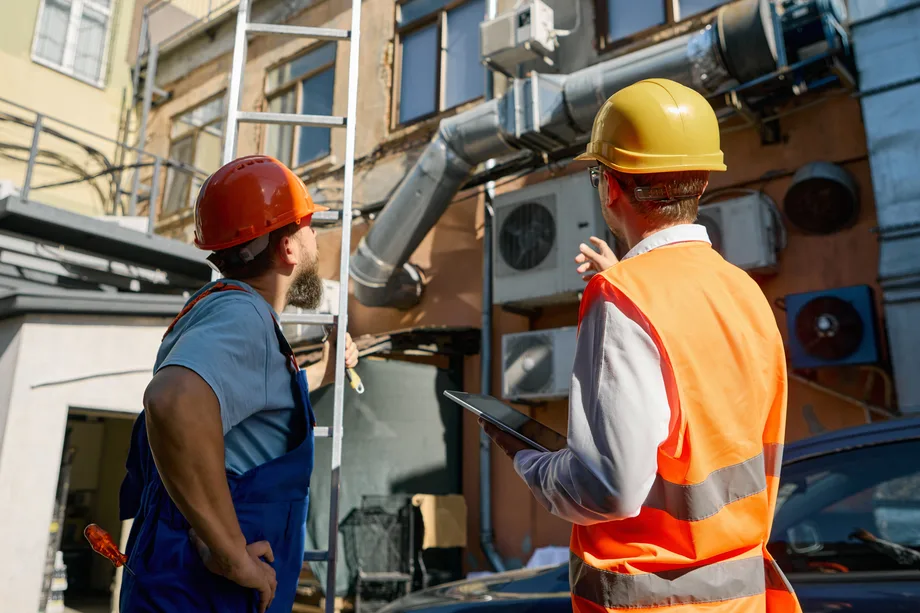
Boiler-room, burner and multi-unit claims on a New York HVAC account
New York’s oil heat, older multi-unit housing and permit-stage insurance checks produce a recognizable set of losses.
- Soot after an oil-burner tune-up in a two-family house. A burner serviced in an oil-heated New York residential building misfires after the crew leaves and fouls both units — the completed-operations side of general liability.
- A no-heat callback that turns into frozen pipes upstate. A furnace or boiler repair fails during an upstate Buffalo or Syracuse cold snap and burst piping damages the building — again completed operations under general liability.
- A condensate or chiller leak in a Manhattan apartment building. Water from a rooftop unit or an air handler serving the building travels through the floors below — third-party property damage under general liability.
- A pay-by-the-job installer hurt under the Fair Play Act presumption. Under the Construction Industry Fair Play Act presumption, an injured installer you treated as independent can become your workers compensation claim.
- Recovery machines and gauges taken from a Queens van. Gear stolen overnight from a service van parked in Yonkers or the outer boroughs is a contractors equipment loss, and a loaded van in an at-fault crash on a snowy Thruway run is a commercial auto claim.
Why New York burner, boiler and cooling shops send us their permit paperwork
A New York HVAC program is judged at the permit office as much as at claim time, so we build it around the state’s forms: the C-105.2 your carrier sends to the municipality, or the U-26.3 when the State Insurance Fund writes your comp, plus the DB-120.1 for disability and Paid Family Leave, all in the exact legal name and federal ID on your permit application. For New York City licensees we format the certificates the DOB Licensing & Exams Unit expects. We match the operations description to the work you do — Class A or Class B oil burner installation, gas work under a Master Plumber, residential boiler and furnace service, commercial rooftop cooling — and we read your subcontracts against the Fair Play Act presumption before a job starts. From residential boiler replacements in Albany to chiller work in Manhattan, we place the class with carriers that write it.
Major New York HVAC Markets
New York is not one market — it is the building-dense downstate metro of New York City and Yonkers, the western cities of Buffalo and Rochester, the snowy central city of Syracuse, and the Capital Region around Albany, each with its own seasonal load and service mix. These are the major HVAC submarkets we place across.
New York City
The largest and most building-dense metro in the country runs heavy commercial, high-rise, and institutional mechanical work alongside an enormous residential service base, with HVAC credentials issued locally by the city. Cold winters drive heating load while hot, humid summers bring intense air-conditioning and commercial cooling demand across the five boroughs nearly year-round.
Buffalo
A western New York city with long, cold, snowy winters that make heating reliability the dominant demand driver. An older housing and commercial stock drives boiler, furnace, and heat-pump retrofit and service work, with summer cooling a secondary load.
Rochester
A Finger Lakes-region city with cold winters and a deep residential and commercial service base built on aging mechanical systems. Heating service leads the calendar while humid summers add real air-conditioning and ventilation work.
Yonkers
A dense downstate city just north of New York City with heavy residential and light-commercial service alongside mechanical work. The mix of cold-winter heating and hot, humid summers keeps crews active across both sides of the calendar.
Syracuse
A central New York city known for severe, snowy winters that make heating reliability the core of the service calendar. Boiler, furnace, and heat-pump work anchors the cold season, with summer cooling a meaningful secondary share.
Albany
The state capital combines government, institutional, and commercial buildings with a residential service base across the Capital Region. Cold winters drive heating load while hot, humid summers add air-conditioning and commercial cooling work across the year.
New York is one of the 48 states we are licensed in. As each state page comes online you can compare licensing, season, and market conditions across every state we serve.
New York follow-ups: comp forms, oil-heat claims and residential versus commercial programs
Because New York checks comp and disability coverage at the permit stage, start with workers compensation, then general liability and its completed-operations coverage, where oil-burner, boiler and multi-unit water claims land. Contractors equipment covers the recovery machines and gauges in the van, commercial auto covers the vans on upstate winter roads and downstate traffic, and an umbrella matters when a New York City building owner’s contract asks for higher limits. Residential oil-burner, boiler and furnace service fits residential HVAC contractor insurance; chillers, rooftop units and building-systems work fit commercial HVAC contractor insurance. To compare New York with New Jersey or Connecticut, use the states we serve index. Shops that also work outside New York can compare the permit-stage rules here with the national overview of insurance for HVAC contractors.
New York HVAC Insurance FAQs
What insurance does New York require before a heating contractor gets a permit?
Proof of workers’ comp and of disability and Paid Family Leave benefits. Workers’ Compensation Law §57 and §220(8) require every state and municipal entity in New York to confirm that coverage before it issues a permit, license or contract, renewals included. The accepted forms are the C-105.2 comp certificate from your carrier (U-26.3 if the State Insurance Fund insures you), the DB-120.1 for disability and Paid Family Leave, or a CE-200 exemption if you have no employees. ACORD certificates are not accepted as proof of New York comp. General liability is not part of that state check, though a New York City DOB licensee must keep a liability certificate on file with the department.
Is there a New York State HVAC license, or only New York City credentials?
There is no statewide HVAC contractor license in New York; licensing is local. In New York City, the Department of Buildings has no HVAC or mechanical contractor license as such, but it licenses Oil Burner Equipment Installers — Class A for any oil-burning equipment, Class B for equipment burning the lighter domestic fuel-oil grades — and requires a Master Plumber license or a Gas Work Qualification for gas work. Buffalo, Rochester, Syracuse, Yonkers and Albany set their own local rules, so we confirm the credential for each New York jurisdiction you work in.
Does furnace or boiler work in New York’s older residential buildings change my insurance?
It changes where New York claims come from. Census data put New York’s median residential building far older than the national median, with fuel oil heating a far larger share of homes than nationally and two-to-four-family houses and apartment buildings far more common. A failed burner, furnace or boiler repair can leave soot, carbon monoxide or frozen-pipe damage across several units, which is the completed-operations side of general liability — so the limits and the operations description should reflect residential multi-unit work, not single-family service alone.
If I pay a heat pump or radiant heating technician by the job in New York, do I have to cover them?
Possibly. New York’s Construction Industry Fair Play Act presumes that a worker performing services for a construction contractor is that contractor’s employee for comp, disability and Paid Family Leave purposes, unless the contractor proves every part of the statute’s independent-contractor test. If a heat pump installer or radiant heating technician does not meet that test, an injury on your job can become your workers’ comp claim — which is why we review how each helper is engaged before binding.
Can a New Jersey or Connecticut HVAC contractor work in New York on its home-state comp policy?
Not on a New York construction project. The New York Workers’ Compensation Board requires an out-of-state employer working as a contractor or subcontractor on a New York construction project to carry full New York coverage, which means New York listed in Item 3A of the policy’s information page. The other-states entry in Item 3C is accepted only for limited presence, such as attending meetings or passing through without stopping to work.
Do you write HVAC contractor insurance near me in Buffalo, Rochester or the Capital Region?
Yes. We place heating and cooling contractors statewide — upstate around Buffalo, Rochester, Syracuse and Albany as well as New York City and Yonkers. NOAA’s normals for Greater Rochester International Airport show a heating load far above cooling, so upstate programs lean on winter furnace and boiler exposure, while downstate accounts add more rooftop and chiller cooling work. The permit-stage insurance proof under Workers’ Compensation Law §57 is the same in every New York city, town and village.
Get a New York HVAC insurance quote
Tell us how your New York operation works — residential service, commercial and mechanical, or both — and we will market it to carriers that write the class.