

Restaurant HVAC technician insurance is the usual contractor program, checked against what a commercial kitchen adds: grease exhaust, make-up air, fuel-burning equipment, refrigeration and rooftop work. No official source we read says which policy pays for a kitchen loss, so confirm your wording with your agent. This post is general education, not legal advice.
What does restaurant work add to an ordinary HVAC service call?
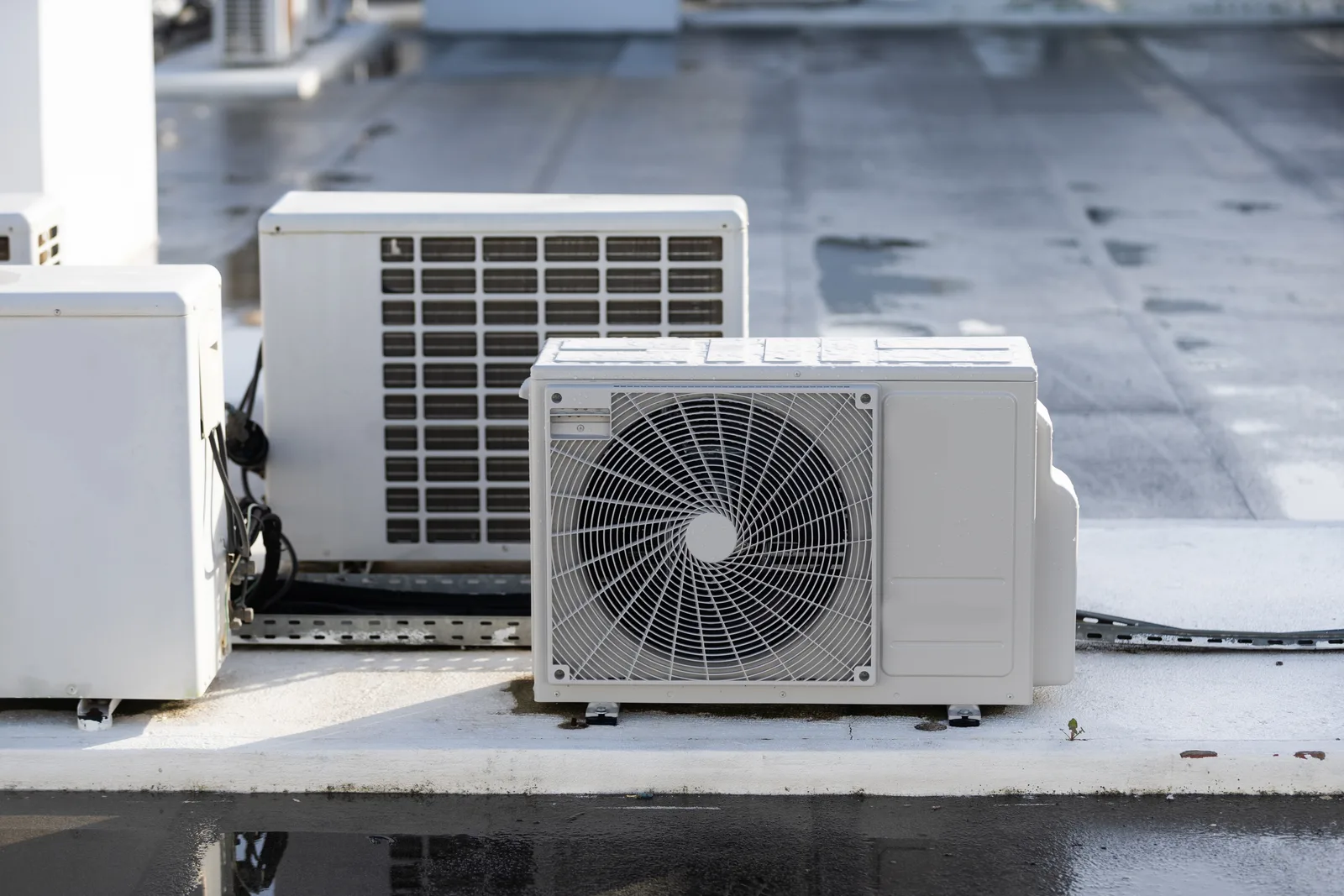
A restaurant puts more systems in one small building than most customers do, and they depend on each other. The dining room has comfort cooling and heating. The kitchen has a hood that pulls air out and a make-up air unit that puts air back. There may be gas-fired equipment, a walk-in cooler, a freezer and an ice machine, and much of it sits on a flat roof.
For insurance, that mix matters because a single visit can touch several kinds of exposure. An injury to your technician is one question. Damage to the customer’s building is another. Damage to the equipment you were working on is a third, and a problem that shows up weeks later is a fourth. The basic program is described on our HVAC contractor insurance page. This post walks through the kitchen-specific parts so you know what to raise with your agent.
The diagram below sorts a restaurant into the zones a technician moves through and the question each one raises.
How do kitchen exhaust and make-up air change the liability picture?
They put your work next to a fire-protection system that someone else usually maintains. A kitchen hood removes heat, smoke and grease-laden air, and the make-up air unit replaces what the hood removes. If the two fall out of balance, doors pull hard, pilot lights misbehave and the hood captures poorly. A technician who adjusts a fan or a damper is changing how that system performs.
The standard that governs this area is published by the National Fire Protection Association as NFPA 96, the standard for ventilation control and fire protection of commercial cooking operations. We are naming the standard so you know where the rules sit. We have not summarized its requirements here, and the edition your city enforces is a question for the local fire official.
The insurance point is scope. Hood cleaning, duct cleaning and suppression service are often done by other trades. If your work order does not say what you touched, a later fire claim can sweep in everyone who was on the roof that year. Ask your agent how your general liability policy treats a claim that arises after you leave, and read our post on completed operations coverage for HVAC so you know the term before that conversation. If you install or balance air systems as a main line of work, the ventilation system contractor insurance post goes further.
Why does gas-fired make-up air raise a carbon monoxide question?
Because the unit burns fuel and delivers air into an occupied room. The CDC describes carbon monoxide as an odorless, colorless gas that kills without warning. That page is written for the public and is not an installation code, but it explains why fuel-burning equipment gets careful attention.
In a kitchen, a strong exhaust hood can work against the venting of other fuel-burning appliances when make-up air is short. You do not need to settle the engineering to see the insurance question: a venting problem may not show itself on the day of service. Keep a record of the combustion and venting checks you made and the condition you left. Then ask your agent how a carbon monoxide claim would be handled. Our post on whether HVAC insurance covers carbon monoxide claims covers the policy wording to look for.
What about the walk-in cooler and the ice machine?
Refrigeration in a restaurant brings federal refrigerant rules into the visit. EPA states that its Section 608 rules prohibit intentionally venting refrigerant while maintaining, servicing, repairing or disposing of air-conditioning or refrigeration equipment, and its venting page lists the releases that remain permitted. EPA also says a technician who services this equipment must be certified, and that the tests are specific to the type of equipment.
Two insurance questions follow. The first is how your policies treat a refrigerant release, which our post on refrigerant leaks takes up. The second is stored product. We did not find an official source that says how coverage treats a customer’s spoiled food, so ask your agent which policy, if any, is written to respond. The companion post on HVAC refrigeration contractor insurance covers the record-keeping side.
What changes when the equipment is on the roof?
The roof adds fall exposure for your crew and lifting exposure for the equipment. OSHA’s construction rule on fall protection, 29 CFR 1926.501, requires that each employee on walking and working surfaces be protected from falling through holes, including skylights. Whether that construction rule governs a given service call is a question for OSHA or a safety professional, and OSHA’s fall protection page is the place to start.
A restaurant roof can also carry residue near the exhaust fan, and wet or greasy footing is worth a note in your job hazard review. An injured employee raises a workers compensation question, so confirm with your agent that the policy describes rooftop service work.
If you replace a unit with a crane, the equipment in the air is a separate issue from the building below it. Our post on riggers liability explains why the lifted load is often not answered by general liability.
Real-World Scenario: An illustration, not a real case. A technician replaces a belt on a rooftop exhaust fan at a diner and notes on the work order that the hood, the duct and the suppression system were not part of the visit. Months later the owner’s insurer asks every vendor what they did on the roof. The contractor sends the dated work order and photos, and the question about the hood goes to the company that serviced it.
Which policies should a restaurant HVAC technician ask about?
Start with the lines every HVAC contractor carries, then ask how each one treats kitchen work. These are questions to put in writing, not conclusions.
- General liability. Does my application say I service restaurants, and does any exclusion apply to cooking exhaust, fire or pollutants?
- Workers compensation. Is rooftop and kitchen service work described the way my crew performs it?
- Commercial auto. Are the vehicles my technicians drive to after-hours calls listed? See commercial auto.
- Tools and equipment. Are recovery machines, gauges and meters covered when they are in the van or on the roof? See contractors equipment.
- Higher limits. Do my restaurant or landlord contracts ask for more than my current limits? See umbrella.
Timing is part of the picture too. Restaurant calls often come at night or before opening, when the kitchen is closed and the manager wants the equipment running by the first shift. That means driving at odd hours and working alone on a roof. Other calls come in the middle of service, with hot equipment, wet floors and kitchen staff moving around your ladder. Tell your agent which of those is normal for you, because it describes the injury and vehicle exposure more honestly than a list of equipment does.
Restaurant chains and landlords often send their own insurance requirements. Compare them with our post on what commercial HVAC clients require before you sign.
How should you document a restaurant job?
Write the scope so a stranger could tell what you did and did not touch. Records do not change what a policy covers, but they let your agent answer a claim with facts.
Name each piece of equipment you serviced. State which systems were outside your work, especially the hood, the grease duct and the suppression system. Record the checks you made on fuel-burning equipment and the condition you left. Note any hazard you reported to the manager, and get a signature or send it by email so there is a date on it. Keep refrigerant records with the job, and take photos of the equipment before and after, since a picture with a date settles more arguments than a memory does.
When your notes are in order, request a quote and bring the list of restaurant accounts with you. You can also read how we work or see how commercial HVAC contractor coverage fits together.