

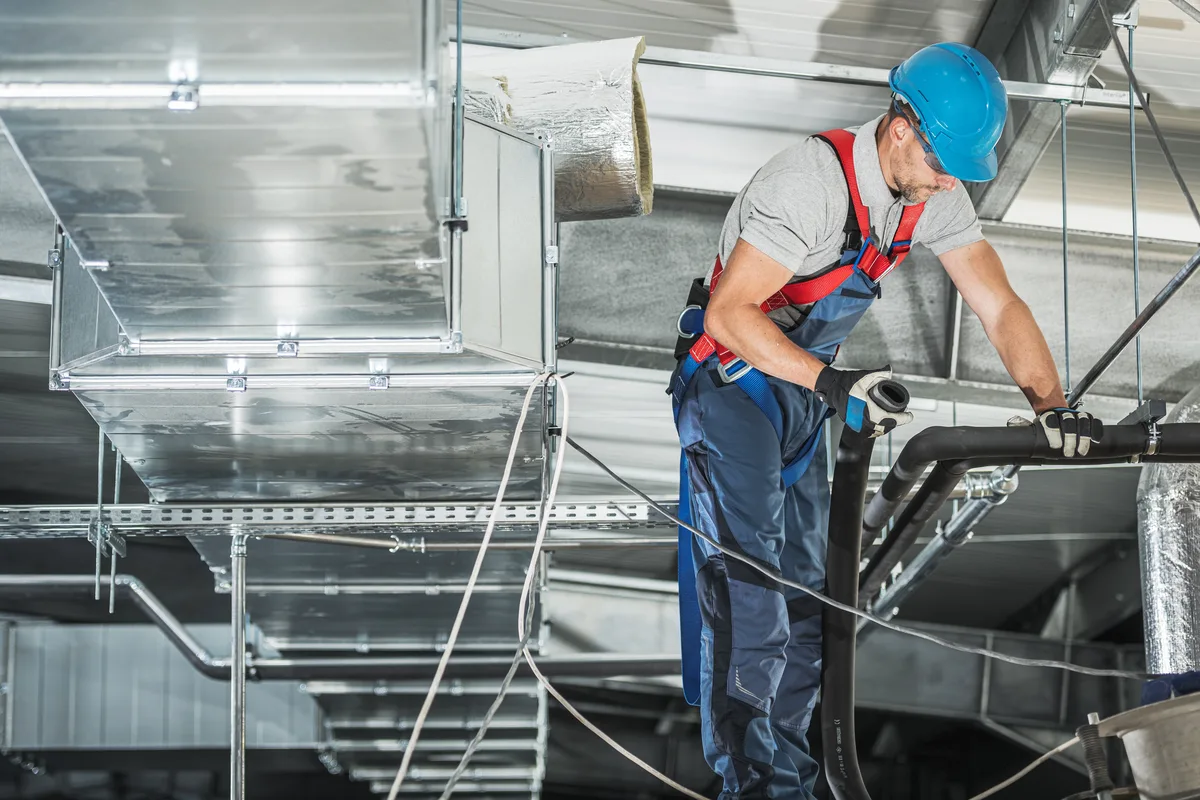
Class code 5537 is the NCCI workers compensation classification for HVAC installation, service, and repair — the code most HVAC field payroll is reported under in states that use the NCCI system, and the one that quietly sets what the coverage costs. Workers compensation is rated by classification: the code groups your employees by the kind of work they do, and the rate attached to that code, adjusted by your own claims history, drives the premium. This guide explains what 5537 actually is, why your policy may show a different number, the adjacent codes for related work, and what to check on your own classification before an audit tests it.
The reason the code matters so much is that it is the single field on the policy doing the most pricing work, and it is also the field most often wrong. The full treatment of HVAC workers compensation lives on our workers compensation page; this post stays on the question contractors actually search — what code 5537 is, how it varies by state, and how to make sure your payroll is classified the way the work is actually done.
What class code 5537 actually is
NCCI is the rating organization whose classification system most states use for workers compensation, and its codes exist to match payroll to the risk of the work. Code 5537 is the classification for HVAC installation, service, and repair — the field work that defines the trade, from changeouts and new installs to service calls and warranty repairs. When a residential or commercial HVAC shop reports its field payroll, 5537 is the classification it most commonly lands under in NCCI states, and the rate tied to that code is what the payroll is multiplied against to build the premium.
It is a real, recognized classification rather than a label a carrier makes up, which is exactly why it is worth knowing by name. Knowing the code lets you check that the work you actually do is the work the policy says you do — and that the right share of your payroll is sitting under it. How the code is applied, and which rate attaches to it, is set by your state and carrier and varies between them, so confirm your classification rather than assuming the national picture matches your policy.
The state variants: why your code may not read 5537
Not every state uses 5537 for HVAC work, and seeing a different number on your policy is usually the rating system, not a mistake. Several independent and state-rating bureaus assign their own classification to the same trade. In some contexts — New York and Texas among them — the code reads 5536. In others, such as New Jersey and California, it reads 5538. A Michigan context uses 5550, and a Pennsylvania or Delaware context uses 0664. The work behind all of them is the same HVAC installation, service, and repair; only the code label changes with the rating system that governs the state.
So if your policy reads 5536 in Texas or 5538 in California rather than 5537, that is generally the state variant doing exactly what it should. The thing to confirm is that the code on the policy matches both your state and the work you actually perform — your state and carrier determine the exact code that applies, so verify yours rather than assuming the national code is the one on your declarations.
Adjacent codes: related work that classes separately
Some of what an HVAC business does is related to the core trade but rated under its own classification. Code 9014 is associated with duct cleaning, 9519 with portable air-conditioning and appliance service, and 3724 with standalone refrigeration or millwright-type work. A shop whose payroll is overwhelmingly install, service, and repair generally sits under 5537 or its state variant, but a business with a meaningful book of one of these adjacent activities may have payroll that properly belongs under the adjacent code instead.
This matters because workers compensation is built on matching payroll to the work, and a real activity that classes separately should be reported on its own code rather than swept into the main one. Which adjacent codes apply, and how payroll is split across them, varies by state and carrier — confirm your classification so each piece of the operation is rated for what it actually is.
Why classification matters: the rate and the audit
The reason all of this is worth getting right is that the class code drives the rate, and the rate drives the premium. A misclassification therefore does not just mislabel the work — it misprices the whole policy. The most common version of the problem is the field-versus-office split: payroll for techs doing HVAC field work reported under a lower-rated clerical or office classification. It can look fine until an audit reviews the actual duties, reclassifies the payroll, and produces a balance owed after the fact.
The mistake runs the other way too. Payroll classed under a code more severe than the work warrants means paying more than the operation should. Either way, the cure is the same: report payroll under the code that matches the work, keep the field and office split honest, and keep records that support it. A clean classification is what makes the annual audit a confirmation rather than a surprise, and it is the part of the policy most within a contractor’s control.
The experience modifier: the multiplier on top of the code
Once the code sets the rate, your experience modifier — the experience modification rate, often called the EMR — adjusts it. The modifier is a multiplier built from your own claims history compared with other employers in your classification. A record better than expected for the class can pull the multiplier below the baseline and reduce premium; a worse record can push it above the baseline and raise it. The important mental model is that the modifier scales the rate the code sets — it does not replace the code, and it is calculated from your own losses, so it is specific to your business.
Because the modifier rewards fewer and smaller claims over time, it is the place where safety and claims management show up directly in cost. Strong jobsite practices, prompt and well-handled claims, and a clean loss history all feed it. The classification and the modifier work together: the code says what the work is, and the modifier says how your own history adjusts the price of insuring it.
California: SB 216, SB 1455, and workers comp with no employees
California has moved toward requiring workers compensation for certain licensed contractors even when they have no employees. Under California SB 216, with related provisions in SB 1455, licensed contractors in specified classifications must carry workers compensation regardless of employee count, phased in by license classification over time. Licensed C-20 HVAC contractors are among the trades affected, and the deadline for the remaining license classifications was pushed to January 2028.
For a California HVAC operator, that changes the old assumption that no employees means no workers compensation obligation. Because the details and timing are set by California law and tied to your specific license, confirm your obligation with the state licensing board and your carrier rather than relying on a general rule — this is a real requirement with real deadlines, and the safe move is to verify where your license sits in the phase-in.
How to check your own policy
The mechanics above turn into a short list to confirm on your own policy — the actionable part of this post:
- Confirm the class code matches your state and your work. Whether it reads 5537 or a variant such as 5536, 5538, 5550, or 0664, check that the code fits both the state you operate in and the work you actually do.
- Confirm the field-and-office payroll split. This is the most common audit issue; make sure field payroll is not parked under a clerical code, and that any adjacent activity sits on its right code.
- Ask how your experience modifier is built. Understand that it multiplies the rate the code sets, and that your loss history moves it — so safety and claims handling are part of managing cost.
- California operators: confirm the SB 216 / SB 1455 timeline for your license. If you hold a C-20 license, verify your workers compensation obligation and where January 2028 lands for your classification.
How every one of these is applied varies by state and carrier — confirm your classification rather than assuming the default fits your operation.
What to do before the audit
Treat classification as something you verify before the audit, not something you discover during it. Carry workers compensation with the code matched to your state and work, keep the field-and-office payroll split honest, and use safety and claims discipline to manage the modifier that scales your rate. The code is real, the variants are real, and the difference between a clean policy and a surprise balance is whether your payroll is classified the way the work is actually done. When you are ready, start a quote, read the full workers compensation treatment, see what general contractors require from HVAC subs since workers comp is almost always on that list, review how EPA 608 certification fits your insurance picture, or check how it sits in a commercial HVAC operation and in what drives HVAC insurance costs.