

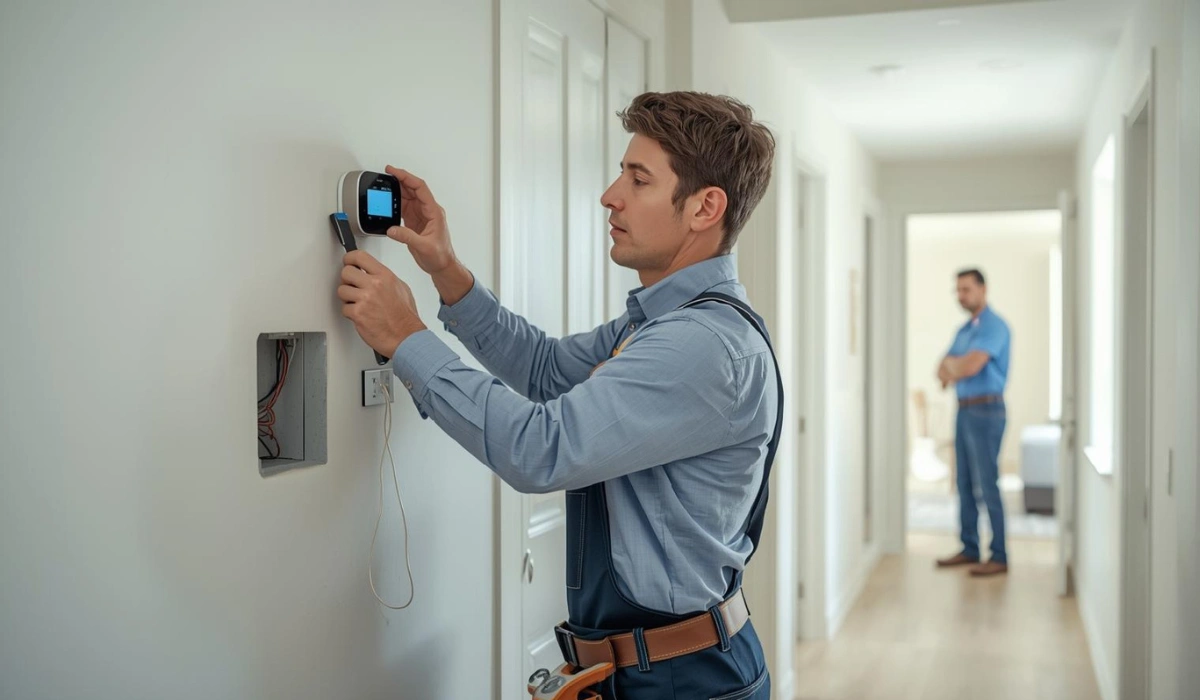
A maintenance-agreement base is the most valuable thing most HVAC businesses can build, and it is built one agreement at a time. Recurring revenue under agreement — planned-maintenance memberships on the residential side, scheduled service contracts on the commercial side — does two things nothing else does as well: it steadies cash flow through the slow months, and it is the lever buyers reward most when they decide what the business is worth. This guide is about how to grow that base on purpose, as a system rather than an accident of which customers happened to ask.
The reason to treat it as a system is that recurring revenue compounds in a way demand work never does. A one-time changeout is gone the day it is finished; you re-earn that revenue the next time the customer happens to call. An agreement renews. Add agreements faster than you lose them and the base grows every year on its own momentum, which is exactly why a shop heavy in contracted recurring revenue runs steadier and reads stronger than a same-size shop built on call-when-it-breaks work.
Why recurring revenue is the lever that moves everything
Start with what an agreement actually is: a customer who has chosen the relationship before anything breaks. That single fact changes the economics of the business. The agreement customer calls you first, buys repairs and replacements from you when the time comes, and gives you scheduled, predictable visits in between. The demand customer calls whoever answers, shops the replacement, and disappears until the next failure. The same neighborhood, the same equipment, two completely different revenue profiles — and the difference is whether the relationship is contracted in advance.
That is why recurring revenue is the lever that moves everything downstream. It feeds the replacement pipeline, because the agreement is how you are in the building when the aging system finally needs to be changed out. It feeds technician utilization, because scheduled visits fill the calendar in the quiet weeks. And it feeds value, because a buyer reading the business sees revenue that transfers. Every other improvement an owner can make — better dispatch, a deeper bench, cleaner books — is amplified when it sits on top of a growing agreement base rather than a demand book that resets each year.
Raise the attach rate: turn service calls into memberships
The fastest growth lever most shops have is the attach rate — the share of service and replacement jobs that convert into a recurring plan. The opportunity is already in the building. A technician who has just diagnosed and fixed a problem is standing in front of a customer at the exact moment trust is highest, and that is the moment to offer the agreement. Convert even a meaningful slice of those visits and the base grows out of work you are already doing, with no new lead cost attached.
Making that happen is a process, not a slogan. Your techs have to be trained to present the plan as a natural part of the visit rather than a separate sales pitch, and they need a simple, consistent way to do it — one offer, clearly worth buying, made the same way on every call. The plan itself has to deliver something the customer feels: scheduled visits that actually get scheduled, priority when the heat wave hits, and a member rate on repairs that is real. And the conversion has to be measured, because you cannot improve an attach rate you do not track. When you can see which techs convert and which offers land, you can coach the gap closed instead of guessing at it.
Build tiers customers actually choose
Once the offer is being made, the structure of the offer decides how much each agreement is worth. A clean tier ladder — typically a basic plan, a middle plan that most customers land on, and a premium plan for those who want the most — lets customers self-select while quietly anchoring the value of the middle option. Most people, given three clear choices, choose the middle one, so the design work is making the middle tier the obvious fit for a typical customer rather than stacking up options that stall the decision.
The discipline is to keep the ladder short and the value differences legible. Each step up should add something the customer can see and want — more visits, deeper discounts, faster response, longer coverage — not a list of fine-print distinctions. A tier structure that is easy to understand raises both the conversion rate and the average revenue per agreement at the same time, because customers buy more confidently when the choice is clear. On the commercial side the same logic applies in contract form: scoped service levels that map to how critical the equipment is, so a customer with demanding, sensitive systems buys the coverage that matches the risk.
Renewals are where the value compounds
Adding agreements only builds a base if you keep them, so renewal is where the compounding actually happens. A book of one-year agreements that mostly lapse is not recurring revenue — it is demand work with extra paperwork. The shops that build a durable base treat renewal as a process they run rather than an event they wait for: they know when every agreement comes up, they reach out before it expires rather than after, they default to automatic renewal wherever the customer agrees, and they make sure the visits that were paid for were actually delivered so the value is obvious when the renewal lands.
The unglamorous part is the record-keeping, and it is also the part that matters most. Clean documentation of every agreement, every scheduled visit, and every renewal date is what makes the base manageable as it grows past the point any owner can hold in their head. It is also what makes the base transferable — a buyer can only count on recurring revenue they can see documented and renewing, so the same records that drive retention today are what let the revenue carry its full weight in a sale later. Retention is not a discount you offer; it is a member experience worth keeping plus a system that never lets a renewal slip.
How recurring revenue smooths the seasons
The other payoff is operational, and owners feel it every year. HVAC demand swings hard with the weather: the phones overload on the first real heat wave and the first hard freeze, then go quiet in the shoulder seasons in between. A business that lives on demand alone rides that swing — overwhelmed and then idle — which makes payroll a guess and makes it hard to keep good technicians busy enough to keep them at all. A maintenance base flattens the curve, because scheduled spring and fall tune-ups put productive, billable work on the calendar in exactly the slow weeks demand cannot fill.
That smoothing is worth more than the visit revenue itself. It lets you plan payroll against a predictable base, it keeps your best techs working and earning year-round instead of looking elsewhere in the slow season, and it puts you in the building ahead of the rush so the emergency calls that do come in land with customers who already know you. The recurring base is, in effect, the keel that keeps the business steady while demand work supplies the gusts — and a steadier business is both easier to run and easier to sell.
Real-World Scenario: Two HVAC shops do roughly the same volume of work in the same market. The first treats every service and replacement call as a chance to offer a plan, builds a short, clear tier ladder most customers can choose from, and runs renewal as a tracked process so almost none slip — so each year its agreement base is larger than the year before, its slow seasons are filled with scheduled visits, and it is in the building when the aging systems need changing out. The second does fine work but offers a plan only when a customer asks, lets renewals lapse quietly, and lives on whatever the weather sends. When a hard season comes, the first shop coasts on its scheduled base while the second scrambles between feast and famine. Same volume, very different businesses — and the difference is the recurring engine one of them chose to build.
Tying the engine to what your business is worth
All of this connects directly to value, which is why recurring revenue gets the first question from any serious buyer. A larger, durable, well-documented agreement base is read as durable, transferable earnings, and advisory commentary on HVAC deals frequently frames a strong maintenance-agreement base as worth meaningfully more on the multiple — sometimes described as roughly two to three additional turns of EBITDA. Treat that as directional commentary rather than a formula; the dependable point is that contracted recurring revenue carries a stronger multiple than the same dollar of one-time work, and the size of the actual effect on your business belongs to a professional reading your real numbers. For how those drivers turn into a defensible figure, see what your HVAC business is worth.
If you are growing the base with an eventual sale in mind, the recurring engine reinforces the other levers: a deep agreement book is easier to run without the owner in every truck, which is the heart of building a business that runs without you, and the residential membership base versus commercial-contract balance is its own decision worth thinking through in residential versus commercial profitability. The work the recurring base generates also runs through your coverage — a fuller schedule means more crews, more vehicles, and more equipment in the field, so it is worth making sure your contractors equipment and residential HVAC service coverage match how the operation actually runs, and worth understanding what drives HVAC insurance costs as the crew count grows. When the operation is ready to be insured to the way it really runs, start a quote. Build the agreement base patiently and it pays you twice — steadier every season you own it, and stronger the day you decide to sell.