
States we serve · Virginia
Virginia HVAC contractor insurance
Virginia licenses an HVAC firm twice over: DPOR’s Board for Contractors sizes the license — Class A, B or C — by the value of the work, and it will not license a heating, ventilation and air-conditioning contractor without a master HVAC tradesman behind it. We write the general liability, commercial auto, workers compensation, contractors equipment and umbrella for Virginia HVA contractors, in a state where electricity heats more homes than nationally and the Norfolk airport normals show a cooling load that runs much closer to the heating load than in northern states.

In Virginia the license tells an insurer a great deal before the application does. Chapter 11 of Title 54.1 requires a license for contracting work in the Commonwealth, and the Department of Professional and Occupational Regulation’s Board for Contractors sets the class by value: Class C for smaller single contracts and annual volume, Class B for mid-sized work, Class A above that. The same statute directs the Board to require a master tradesman license as a condition of licensing a heating, ventilation and air-conditioning contractor, and the Board’s regulations define the HVA classification — and leave gas piping out of it. The work sits on a housing stock that Census data show is newer than the national median, heated by electricity more often than nationally and by utility gas less often. NOAA’s normals for its Norfolk International Airport station put heating degree days ahead of cooling degree days, but by a much narrower margin than in the northern states, so Tidewater contractors run two real seasons. We cover the DPOR license first, then the heat-pump and gas risks, the Virginia claims we see and how we build Virginia programs.
Virginia HVAC insurance costs
Virginia HVAC insurance is priced from your operation, not from a statewide rate card. For the drivers an underwriter weighs and how to get an accurate quote, see our guide to how much HVAC insurance costs in Virginia.
Class A, B or C plus the HVA classification: how DPOR licenses Virginia HVAC firms
Virginia licenses HVAC contracting through the Virginia Department of Professional and Occupational Regulation (DPOR) — Board for Contractors. Under Code of Virginia §54.1-1103 no one may engage in or offer contracting work in the Commonwealth without a license, and §54.1-1100 sorts licenses into three classes by the value of a single contract and of the firm’s work over a year — Class C at the bottom, then Class B, then Class A. The class matters for insurance because it caps the jobs a firm may take; a commercial account asking for an umbrella sized to a Class A project should be dealing with a Class A licensee.
The HVA classification and the master tradesman behind it
The Board’s regulations define “HVAC contractors” (HVA) as contractors whose contracts include installing, altering, repairing or maintaining heating, ventilating and cooling systems, steam and hot water heating systems, boilers, process piping and mechanical refrigeration systems, with incidental tanks. The HVA classification does not cover fire suppression, sprinkler systems or gas piping; gas piping and appliances fall under the gas fitting (GFC) and liquefied petroleum gas (LPG) specialties, and the LPG specialty in turn excludes central heating systems that need an HVA or plumbing license. Section 54.1-1100 requires a master tradesman license as a condition of HVAC contractor licensure, and for every classification it holds, a firm names a qualified individual; for a Class A firm, a designated employee must also pass the Board’s examination under 18VAC50-22-60. Individual HVAC tradesmen are licensed separately through DPOR’s tradesman program, which defines HVAC work to include boilers, process piping and mechanical refrigeration.
Insurers on the other side of the policy are regulated by the Virginia State Corporation Commission — Bureau of Insurance (SCC BOI). The DPOR license covers the firm and the tradesman license covers the individual; neither covers refrigerant handling, which in Virginia as everywhere needs a federal credential — see EPA 608 certification as a business asset.
Heat pumps from Hampton Roads to Northern Virginia: where the risk sits
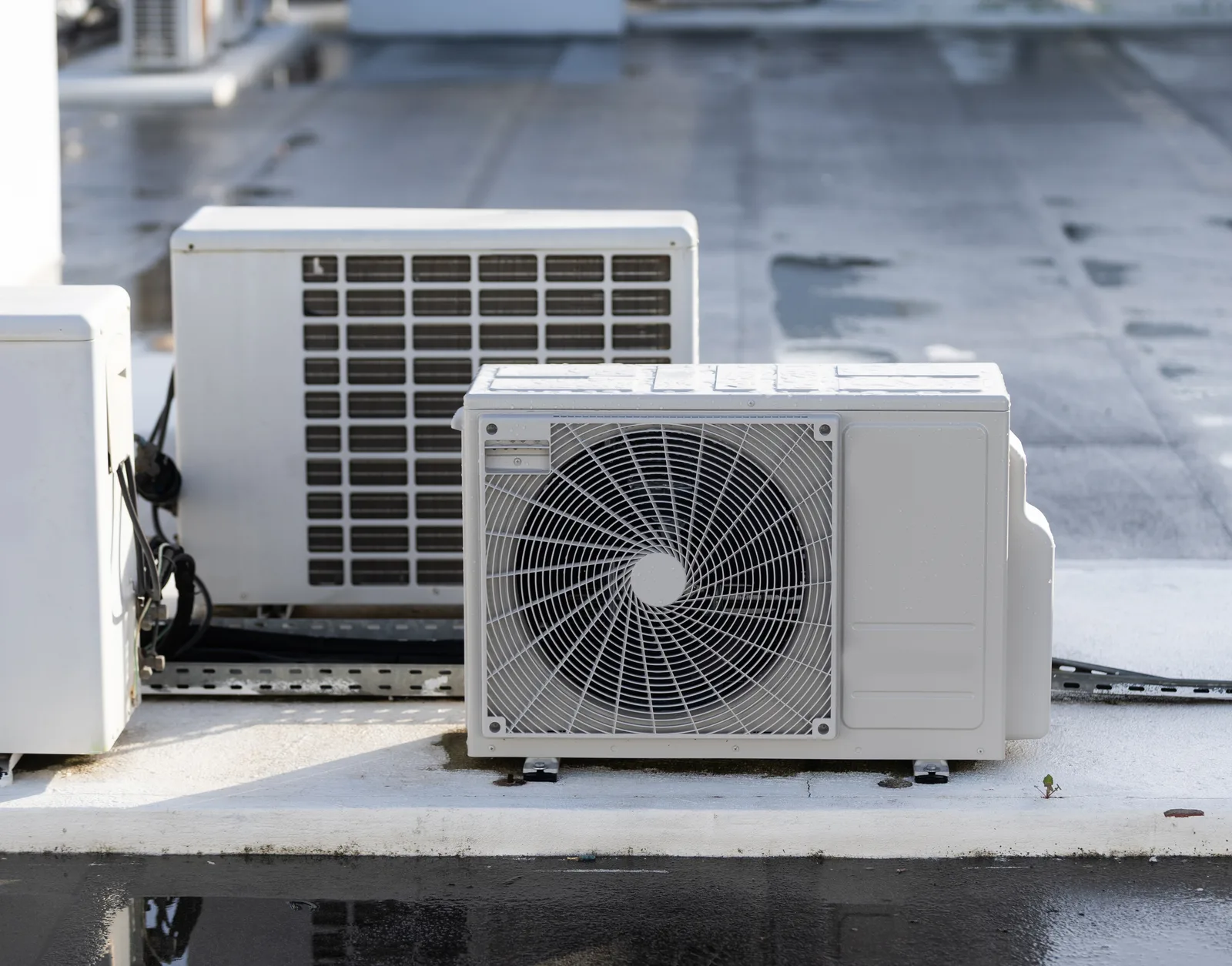
With electricity heating more Virginia homes than nationally, electric heat pumps and air handlers sit at the center of residential work, so a single outdoor unit, line set or air handler install can fail in either January or July. The Tidewater climate adds humidity: NOAA’s Norfolk normals show a cooling load large enough that condensate drains, attic air handlers and duct sweating are concerns through a long humid season in Virginia Beach, Norfolk and Chesapeake. Gas heat is less common than nationally but still present, and because the HVA classification excludes gas piping, a Virginia HVAC firm connecting a gas furnace has to have the gas fitting side licensed as well — a scope question that surfaces in claims when a gas connection fails. In Northern Virginia, commercial work around Arlington and Alexandria brings rooftop units and height exposure onto the program.
Claims that follow Virginia heat-pump, gas and commercial work
These come from Virginia’s electric-heat housing, its humid coast and the limits of the HVA classification.
- A condensate or duct-sweat water loss in Tidewater. An air handler in a Virginia Beach or Chesapeake attic overflows after the install and water comes through the ceiling — completed operations under general liability.
- A gas connection outside the HVA scope. A Richmond crew connects a gas furnace, the connection leaks and a fire follows — a general liability claim that will be read against the firm’s HVA license and any GFC or LPG specialty.
- A rooftop injury on a Northern Virginia commercial job. A technician falls from a rooftop unit in Arlington — workers compensation, with the general contractor’s statutory-employer exposure in the background.
- A loaded van in Hampton Roads traffic. A service van at fault on a Norfolk or Virginia Beach route — the third-party commercial auto exposure behind Virginia contractors’ vehicle-insurance questions.
- Tools taken from a Northern Virginia job site. Gauges and a recovery machine stolen from an Alexandria building under construction — contractors equipment.
Virginia Seasonal Market
Virginia spans a humid subtropical-to-temperate Mid-Atlantic climate with hot, humid summers and cool-to-cold winters, generating year-round demand for both cooling and heating service.
The honest framing: Virginia is a Mid-Atlantic four-season market, so HVAC demand is genuinely dual — hot, humid summers keep air-conditioning install, replacement, and service busy, especially across the Tidewater and coastal region, and cooler winters keep furnaces, boilers, and heating systems in steady work statewide. That balance is why we weight each operation’s coverage to how it actually splits between heating and cooling and between residential and commercial work rather than to a statewide average.
Why Virginia HVA contractors bring us their DPOR license and their subcontracts
We start from the license. The class sets the size of jobs a Virginia firm may take and the HVA classification sets the scope, so we write the operations description to match — and flag gas work that needs a GFC or LPG specialty rather than assuming the HVA license reaches it. On comp, Virginia’s Workers’ Compensation Act (§65.2-101) exempts a business that regularly has fewer than three employees in the Commonwealth unless it elects coverage, and it lets a sole proprietor, single shareholder, single LLC member or partners elect coverage for themselves; we place workers compensation privately and discuss that election with owners who work in the field. Because §65.2-302 makes a contractor liable for comp to a subcontractor’s workers as if it employed them directly, we also collect subs’ certificates. For Class A firms on Northern Virginia commercial projects, we size the umbrella to the contract.
Major Virginia HVAC Markets
Virginia is not one market — it is a humid Tidewater coast, a port and naval hub, an institutional capital region, and a dense Northern Virginia corridor, each with its own mix of residential service and commercial and mechanical work. These are the major HVAC submarkets we place across.
Virginia Beach
The state’s most populous city anchors a coastal residential service-and-replace market alongside resort, hospitality, and commercial buildings. Humid Tidewater summers drive heavy cooling load and keep rooftop and mechanical crews busy across the season.
Norfolk
A port, naval, and institutional hub with dense commercial, military-adjacent, and mixed-use buildings driving mechanical and refrigeration work. A large residential base keeps service and changeout work steady alongside it.
Richmond
The state capital pairs government, corporate, and institutional building-systems work with a deep residential service market. Four-season demand keeps both heating and cooling crews active across the metro year-round.
Chesapeake
A fast-growing Tidewater city where residential development drives install and changeout work. Expanding commercial, logistics, and retail buildings add a layer of rooftop and mechanical demand alongside humid-summer cooling load.
Arlington
A dense, transit-oriented Northern Virginia hub with high-rise residential and commercial towers driving substantial mechanical, rooftop, and building-systems work. The vertical building stock weights demand toward commercial service contracts.
Alexandria
A historic Northern Virginia city blending older building stock with new mixed-use development, sustaining both residential service-and-replace and commercial mechanical work. Four-season demand keeps heating and cooling crews active year-round.
Virginia is one of the 48 states we are licensed in. As each state page comes online you can compare licensing, season, and market conditions across every state we serve.
Going further: Virginia licensing, comp and vehicle reading
For Virginia firms asking about vehicle coverage, start with why HVAC contractors need commercial auto; for Tidewater water losses, read whether general liability covers water damage from a failed condensate line. Firms working under a general contractor, and relying on subs of their own under §65.2-302, should read what general contractors require from HVAC subs and how additional-insured completed-operations wording works. Heat-pump service fits residential HVAC contractor insurance, Class A commercial work fits commercial HVAC contractor insurance, and the states we serve index compares Virginia’s value-tiered license with other states’ schemes.
Virginia HVAC Insurance FAQs
What does HVAC contractor insurance in Virginia need to match?
Your DPOR license. Virginia’s Board for Contractors licenses firms as Class A, B or C by the value of their work and classifies HVAC firms as HVA, a classification that covers heating, cooling, ventilation, boilers, process piping and mechanical refrigeration but not gas piping. Your general liability should describe that scope, and your umbrella should fit the size of project your DPOR license class allows.
Does a Virginia HVAC contractor need a master tradesman?
Yes. Section 54.1-1100 of the Code of Virginia directs the Board for Contractors to require a master tradesman license as a condition of licensing a heating, ventilation and air-conditioning contractor, and the firm names a qualified individual for each classification it holds. If that individual leaves, the firm’s license picture changes — something to tell your insurer about.
Can a Virginia HVA contractor install gas piping for a furnace?
Not under the HVA classification alone. The Board for Contractors’ regulations exclude gas piping from the HVA classification; gas piping and appliances fall under the gas fitting (GFC) or liquefied petroleum gas (LPG) specialties. A Virginia firm that connects gas furnaces should hold the matching specialty, because a gas-connection claim will be read against the licenses the firm actually holds.
What vehicle insurance does a Virginia HVAC business need?
Commercial auto for the vans and trucks the business owns or uses, because a loaded service vehicle on a Hampton Roads or Richmond route carries tools, refrigerant cylinders and materials a personal policy is not built for. Pair it with contractors equipment for the gear inside, and with hired and non-owned auto if technicians drive their own vehicles on Virginia jobs.
Is a Virginia HVAC company below the Commonwealth’s comp headcount line exempt from workers’ comp?
It can be. Section 65.2-101 of Virginia’s Workers’ Compensation Act excludes employees of a business that regularly has fewer than three employees in the same business in the Commonwealth, unless the business elects coverage. Sole proprietors, single shareholders, single LLC members and partners can elect to be covered themselves. General contractors on Virginia jobs will ask for a comp certificate regardless.
Is a Virginia general contractor responsible for my crew’s injuries?
Under §65.2-302 of the Code of Virginia, a contractor that subcontracts part of its work is liable for comp to the subcontractor’s workers as if it employed them directly. That is why Virginia general contractors ask HVAC subs for comp certificates — and why your own subs should show you theirs before you let them on a job.
Get a Virginia HVAC insurance quote
Tell us how your Virginia operation works — residential service, commercial and mechanical, or both — and we will market it to carriers that write the class.