States we serve · Iowa
Iowa HVAC contractor insurance
Iowa licenses HVAC work statewide through the Plumbing and Mechanical Systems Board, and its contractor license comes with insurance built in: a public liability certificate kept on file with the board, a surety bond, proof of workers’ comp, and a licensed master in charge of the work — while state law bars cities from adding their own HVAC licenses. We write general liability, workers compensation, commercial auto, contractors equipment and umbrella for Iowa shops from Des Moines and Cedar Rapids to Davenport, Sioux City, Iowa City and Waterloo.

Iowa’s HVAC license is statewide, and chapter 105 of the Iowa Code writes the insurance into it. Under that chapter, the Plumbing and Mechanical Systems Board, administered by the Department of Inspections, Appeals, and Licensing, licenses apprentices, journeypersons and masters in HVAC-refrigeration, mechanical, sheet metal and hydronic work, and licenses the contractors who employ them. A contractor must keep a licensed master actively in charge of the work, maintain a permanent place of business, file proof of workers’ comp and unemployment insurance compliance, and keep a public liability policy and surety bond on file with the board with advance written notice before either can be cancelled. The same chapter preempts city and county HVAC licensing, so a state license is the one license a Des Moines or Davenport job needs. Behind the work sits an older, gas-and-propane housing stock: Census data put the median Iowa home older than the national median, show utility gas and bottled propane each heating a much larger share of homes than nationally, and count detached single-family houses as a much larger share of the stock. This page covers the Plumbing and Mechanical Systems Board licenses, the chapter 105 insurance and comp proof, the gas-and-propane risk picture and the Iowa markets we place.
Iowa HVAC insurance costs
Iowa HVAC insurance is priced from your operation, not from a statewide rate card. For the drivers an underwriter weighs and how to get an accurate quote, see our guide to how much HVAC insurance costs in Iowa.
Master in charge, city licenses preempted: how the Plumbing and Mechanical Systems Board licenses Iowa HVAC work
Section 105.10 bars anyone from operating as a contractor or installing or repairing HVAC, refrigeration, sheet metal or hydronic systems in Iowa without a board license, and it requires a business doing that work to employ a licensed master who is actively in charge of it; a sole proprietor doing the work must hold the master license personally. Section 105.18 sets the ladder: apprentices enrolled in a registered apprenticeship program and working under supervision, journeypersons who pass the state examination after a registered apprenticeship, and masters who pass the master examination. Within that ladder, section 105.18 gives an HVAC-refrigeration license HVAC and refrigeration work, while a mechanical license covers HVAC, refrigeration, sheet metal and hydronic work, and a mechanical licensee needs no separate HVAC-refrigeration, sheet metal or hydronic license. The department also issues specialty licenses, including a service technician HVAC specialty, a routine maintenance specialty, a hearth systems specialty and a disconnect/reconnect specialty, and a master or journeyperson HVAC-refrigeration or mechanical licensee may disconnect and reconnect existing air-conditioning and refrigeration systems without a special electrician’s license. Section 105.17 then preempts local licensing: city and county HVAC and mechanical licensing provisions are void, a city may not stop a state licensee from doing licensed work, and cities keep only their permit and inspection fees.
The state license does not reach refrigerant handling, which stays with the federal credential; our guide to EPA 608 certification as a business asset explains what it does for a shop. The insurers behind Iowa HVAC policies are regulated by the Iowa Insurance Division (IID).
The liability certificate and comp proof an Iowa contractor license keeps on file
Chapter 105 writes insurance into the Iowa contractor license. Section 105.19 requires an applicant for a contractor license or its renewal to show a public liability policy and a surety bond in amounts the board sets by rule; the policy must be written by a company licensed in Iowa, a certificate must stay on file with the board, and the coverage cannot be cancelled without advance written notice to the board. When the contractor is a company rather than a sole proprietor, section 105.19 has the entity carry the insurance and bond, and they must cover all the plumbing or mechanical work it performs. Section 105.18 adds proof of workers’ comp coverage and of unemployment insurance compliance to the contractor application, and because a chapter 105 contractor also registers under chapter 91C through the same combined application, section 91C.2 requires evidence of comp coverage each year — or a statement that the contractor is relieved of or not required to carry it — and has the insurer notify the state if the policy is cancelled. Section 87.1 is the underlying rule: an employer subject to Iowa’s comp law must insure that liability with an approved insurer, and one that fails to is liable to an injured worker under the common law as modified by statute. With no monopolistic state fund, the policy behind that section 87.1 duty comes from a private carrier, and our workers compensation page covers how it pays.
Iowa HVAC exposure in older detached houses heated by gas and propane
NOAA’s normals for Des Moines International Airport put the heating load far above the cooling load, so an Iowa book is built around furnaces and boilers through a long winter, with a real summer cooling season added on. Census data show utility gas heating a much larger share of Iowa homes than it does nationally and bottled propane a much larger share as well, while electric heat is far less common — which puts gas valves, heat exchangers, flues and venting in town, and propane tanks, regulators and fuel lines in rural Iowa, at the center of the combustion exposure. The housing is older than the national median and detached single-family houses make up a much larger share of it than nationally, so residential furnace and duct work happens in the basements and attics of individual older houses, where a venting mistake after a furnace swap becomes a carbon-monoxide claim. The diagram ties those exposures to the coverage that responds — gas and propane work that fails later under general liability, gauges and recovery equipment under contractors equipment, technicians in basements and on winter rooftops under workers compensation, and vans on the interstates between Des Moines, Iowa City and the Quad Cities under commercial auto.
Iowa Seasonal Market
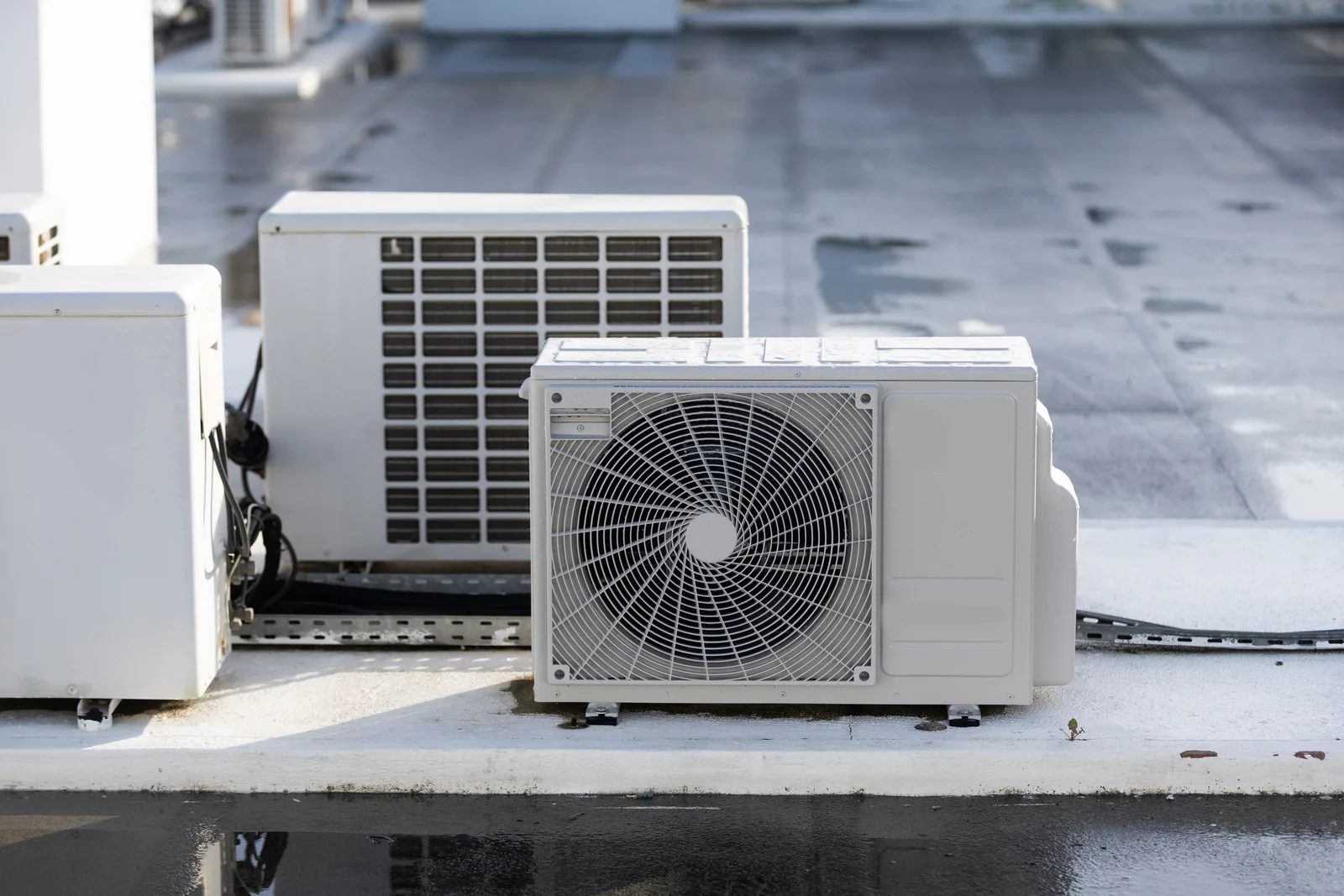
Iowa’s continental climate brings cold, snowy winters that keep heating work steady and hot, humid summers that drive air-conditioning demand, supporting year-round furnace, boiler, and AC service.
The honest framing: Iowa is a genuine two-season market. The cold, snowy winters across Des Moines, Cedar Rapids, the Quad Cities, and the western and eastern regional centers keep furnace, boiler, and no-heat emergency work central to the field calendar, while the hot, humid summers drive a real air-conditioning install-and-service season. Neither half is an afterthought, even with heating the larger load — that two-season shape is why we weight each operation’s coverage to where and how it actually works rather than to a statewide average.
Iowa claim scenarios under a master-supervised license
These are the Iowa losses a licensed contractor’s program has to answer.
- A furnace vent left disconnected in an older Des Moines basement — carbon monoxide reaches the family upstairs after the crew leaves, a completed-operations claim under general liability and the policy whose certificate sits with the board.
- A propane regulator or line fitting that leaks after a rural service call outside Waterloo or Sioux City — with propane heating a much larger share of Iowa homes than nationally, the fire that follows lands on completed operations too.
- A boiler that fails during a January cold snap in a Cedar Rapids rental — frozen and burst pipes turn one no-heat call into property damage for the owner and the tenants.
- An apprentice hurt carrying a furnace down basement stairs in Iowa City — a workers compensation claim on the policy your contractor license and chapter 91C registration had to prove.
- A van crash on an icy stretch of interstate near Davenport — the other driver’s injuries go to commercial auto, and gauges and a recovery machine stolen from the van are a contractors equipment loss.
Board certificate, cancellation notice and comp proof: how we keep an Iowa license insured
We set up the Iowa program around the board file: we issue the public liability certificate to the Plumbing and Mechanical Systems Board with the cancellation notice section 105.19 requires, confirm the limit meets the board’s rule and that the policy covers all the HVAC, refrigeration, sheet metal or hydronic work the entity performs, and coordinate the surety bond. We keep workers’ comp evidence current for the contractor license and the annual chapter 91C registration, so a renewal never waits on a certificate. We describe your operations the way your license does — HVAC-refrigeration, mechanical or a specialty — and we confirm completed operations reaches the gas and propane work that fills Iowa’s long heating season, with an umbrella for commercial and school jobs in Des Moines and Cedar Rapids that ask for higher limits.
Major Iowa HVAC Markets
Iowa is not one market — it is a commercial Des Moines core, an industrial Cedar Rapids, a Mississippi-river Quad Cities, a university Iowa City, and western and eastern regional centers, each with its own season and service mix. These are the major HVAC submarkets we place across.
Des Moines
The state’s largest metro and commercial center pairs cold-winter heating load with a substantial commercial and mechanical market and a deep residential service base. Furnace and boiler work leads the winter calendar while humid summers drive air-conditioning install and service.
Cedar Rapids
An industrial and commercial hub where mechanical and rooftop-unit work runs alongside steady residential furnace and AC service. Cold winters make heating reliability central, with summer cooling demand filling out the year.
Davenport
Part of the Quad Cities on the Mississippi, Davenport carries a mix of residential service and commercial mechanical work across an older building stock. Heating dominates the winter while humid summers keep air-conditioning crews active.
Sioux City
A western-Iowa regional center where cold, windy winters drive furnace and boiler demand across residential and commercial accounts. Summer heat sustains a secondary air-conditioning service season.
Iowa City
A university town with institutional, commercial, and residential demand, Iowa City keeps mechanical and service crews busy through cold winters and humid summers. Heating reliability leads the calendar with cooling work close behind.
Waterloo
A manufacturing-influenced market where commercial and mechanical HVAC work pairs with a steady residential service base. Cold winters drive heating load while summer humidity sustains air-conditioning demand.
Iowa is one of the 48 states we are licensed in. As each state page comes online you can compare licensing, season, and market conditions across every state we serve.
Iowa reading: master supervision, comp proof and propane-heat claims
Begin with general liability, the policy whose certificate the board keeps on file, and our explainers on completed-operations coverage and carbon-monoxide claims for Iowa’s gas and propane furnace work. Because comp proof is part of the contractor license and the chapter 91C registration, workers compensation and our guide to the HVAC workers’ comp class code belong on the list, and hiring and retaining HVAC technicians speaks to a shop that must keep a master in charge. Residential furnace and air-conditioning service under an HVAC-refrigeration license fits residential HVAC contractor insurance, and hydronic, refrigeration and sheet metal work under a chapter 105 mechanical license fits commercial HVAC contractor insurance. A Quad Cities shop crossing the Mississippi into Illinois can compare states through the states we serve index.
Iowa HVAC Insurance FAQs
What does HVAC contractor insurance in Iowa have to include for a Plumbing and Mechanical Systems Board contractor license?
A public liability policy and a surety bond in the amounts the Plumbing and Mechanical Systems Board sets by rule, written by a company licensed in Iowa, with a certificate kept on file with the board and advance written notice to the board before cancellation; if you operate as a company, the entity carries them and they must cover all its work. The contractor application also needs proof of workers’ comp and unemployment insurance compliance. Beyond the license, completed operations, commercial auto, contractors equipment and an umbrella round out an Iowa HVAC program.
Can Des Moines or Cedar Rapids require its own HVAC license on top of the Iowa state license?
No. Section 105.17 of the Iowa Code preempts city and county plumbing, mechanical and HVAC licensing, voids local licensing provisions, and bars a city from stopping a state licensee from doing the work the license covers. Cities can still charge permit and inspection fees, so a Des Moines or Cedar Rapids job still runs through local permits and inspections.
Does an Iowa HVAC company need a licensed master on staff?
Yes. Section 105.10 requires a business that designs, installs or repairs HVAC, refrigeration, sheet metal or hydronic systems to employ a licensed master who is actively in charge of that work at all times, and a sole proprietor doing the work must be a licensed master. The board’s rules allow a grace period if the master leaves, so a departure is something to plan for with both the license and the policy in mind.
Which Iowa license covers furnace and air-conditioning work, and what about disconnecting a condenser?
An HVAC-refrigeration license covers HVAC and refrigeration work, and a mechanical license covers HVAC, refrigeration, sheet metal and hydronic work, each at apprentice, journeyperson or master level; the Department of Inspections, Appeals, and Licensing also issues specialty licenses such as service technician HVAC and routine maintenance. A master or journeyperson HVAC-refrigeration or mechanical licensee can disconnect and reconnect an existing air-conditioning or refrigeration system without a special electrician’s license.
Does a small Iowa HVAC business need workers’ comp for its chapter 105 license and 91C registration?
The contractor license application under section 105.18 includes proof of workers’ comp coverage, and the chapter 91C registration filed with it asks each year for evidence of coverage, of relief from the requirement, or a statement that the contractor is not required to carry it. Section 87.1 requires employers subject to Iowa’s comp law to insure, and an employer that does not is exposed to an injured worker’s lawsuit under the common law as modified by statute.
With propane heating a much larger share of Iowa homes than nationally, is propane furnace work covered differently from natural gas work?
The coverage lines are the same — completed operations under general liability for a leak, fire or carbon-monoxide exposure after you leave, and contractors equipment for your own tools — but in rural Iowa the exposure is larger than a national average suggests. We make sure the policy’s description of operations includes propane appliance and fuel-line work, and that your board license covers the same work.
Get a Iowa HVAC insurance quote
Tell us how your Iowa operation works — residential service, commercial and mechanical, or both — and we will market it to carriers that write the class.