States we serve · Colorado
Colorado HVAC contractor insurance
Colorado has no statewide HVAC license, so the credential that counts is local: a Denver supervisor certificate and contractor license, or a Pikes Peak Regional Building Department mechanical class. In the Pikes Peak region a permit also waits on a workers’ comp certificate or a state-approved rejection of coverage. We write liability, comp, auto, equipment and umbrella coverage to the name and license Denver or the Pikes Peak department keeps on file.

Colorado leaves HVAC licensing to its cities and counties: the state licenses plumbers and electricians through the Department of Regulatory Agencies, but no state agency licenses a heating and cooling contractor, so a Denver job runs on a Denver credential and a Colorado Springs job on a Pikes Peak Regional Building Department license — and Denver says it will not accept a license or certificate issued by another county or state. The insurance questions follow the same map: the Pikes Peak department lists itself as certificate holder, wants a policy number rather than a binder, and asks for a workers’ comp certificate or an approved rejection of coverage before it sells a permit or renews a license. Underneath the paperwork is the housing: Census data show utility gas heating a far larger share of Colorado homes than it does nationally, the housing stock is newer than the national median, and NOAA’s normals at Denver International Airport put the heating load several times the cooling load. This page covers the Denver and Pikes Peak credentials, the state’s comp rules for construction firms, the furnace-heavy risk picture, and the Front Range and Western Slope markets we place.
Colorado HVAC insurance costs
Colorado HVAC insurance is priced from your operation, not from a statewide rate card. For the drivers an underwriter weighs and how to get an accurate quote, see our guide to how much HVAC insurance costs in Colorado.
Supervisor certificates in Denver, mechanical classes in Pikes Peak: Colorado’s local HVAC licensing
Colorado does not issue a statewide HVAC or mechanical contractor license; the State Plumbing Board and the state’s electrical licensing sit inside the Department of Regulatory Agencies, and heating and cooling work is licensed by local building departments. Aurora shows the split plainly: it requires a city contractor license to build, alter or repair a structure, while plumbers and electricians file their state master and contractor licenses with the city instead of holding an Aurora license. On the insurance side, the carriers that write Colorado HVAC programs are regulated by the Colorado Division of Insurance.
Denver’s two-step license
In Denver, Community Planning and Development issues a contractor license only after the company holds, or employs someone who holds, a supervisor certificate for the trade. Denver’s mechanical certificates are split by the work: a Heating and Ventilating Class A supervisor covers warm-air heating, ductwork, ventilation, evaporative cooling, gas piping and burners, with only limited self-contained comfort cooling; a Class B supervisor certificate is limited to one- and two-family dwellings and townhomes; split systems and other refrigeration fall under the Refrigeration Class A certificate or its residential-only Class B; and boilers and hydronic heat sit under the Steam and Hot Water supervisor certificate. Because Denver will not reciprocate a license from another county or state, a shop based in Aurora or Boulder needs its own Denver credentials to take Denver work.
Pikes Peak Regional Building Department classes
The Pikes Peak Regional Building Department licenses contractors for Colorado Springs, El Paso County, Fountain, Woodland Park, Manitou Springs, Monument and several smaller towns. Its Mechanical Contractor A license covers gas piping and HVAC in any structure, Mechanical Contractor B covers one- and two-family dwellings, and the C specialties separate gas piping, commercial refrigeration, and residential maintenance, repair and replacement on existing systems. Service technicians hold a Heating Mechanic IV license, work only on the equipment their employer’s license covers, and must show they can use a combustible gas indicator and a carbon-monoxide detection instrument. Refrigerant handling adds the federal EPA Section 608 certification, which no Colorado building department issues; our guide to EPA 608 certification as a business asset covers that credential.
Colorado’s rejection-of-coverage filing and the Pikes Peak permit check
Colorado’s Division of Workers’ Compensation requires coverage once a business has even one employee — part-time, full-time or family — and presumes that anyone paid for work is an employee unless the worker is free from the business’s direction and runs an independent business in that trade; paying someone as a contractor on paper does not settle it. Construction firms get a stricter rule: a construction business must either insure its owner or file a rejection of coverage, even when it is a sole proprietorship or partnership, and corporate officers and LLC members count as employees unless they meet the Division’s ownership and officer tests and reject. A business without employees that never files the rejection is treated as out of compliance, and the Division can fine an uninsured employer for every day without coverage and leave it paying an injured worker’s claim plus a penalty. The Pikes Peak Regional Building Department enforces the same rule at the counter: a licensed contractor needs a current workers’ comp certificate to buy a permit or renew a license, or a rejection approved by the Division if the business has no employees. Because no exclusive state fund writes Colorado comp, the certificate the Pikes Peak counter wants is issued by a private carrier — our workers compensation page shows how that policy pays a claim.
Colorado Seasonal Market
Colorado’s Front Range and mountain climate delivers cold, snowy, high-altitude winters that keep heating work dominant, alongside hot, dry summers where refrigerated cooling demand is significant in the lower-elevation metros.
The honest framing: the Colorado market is genuinely dual-season and elevation-driven. Cold, high-altitude winters across the Front Range and mountains make furnace, boiler, and heat-pump reliability the dominant demand driver, while hot, dry summers in the lower-elevation metros such as Denver and the Western Slope around Grand Junction push real refrigerated cooling work. That spread is why we weight each operation’s coverage to where and how it actually works rather than to a statewide average.
Altitude, gas furnaces and a newer housing stock: Colorado HVAC exposure
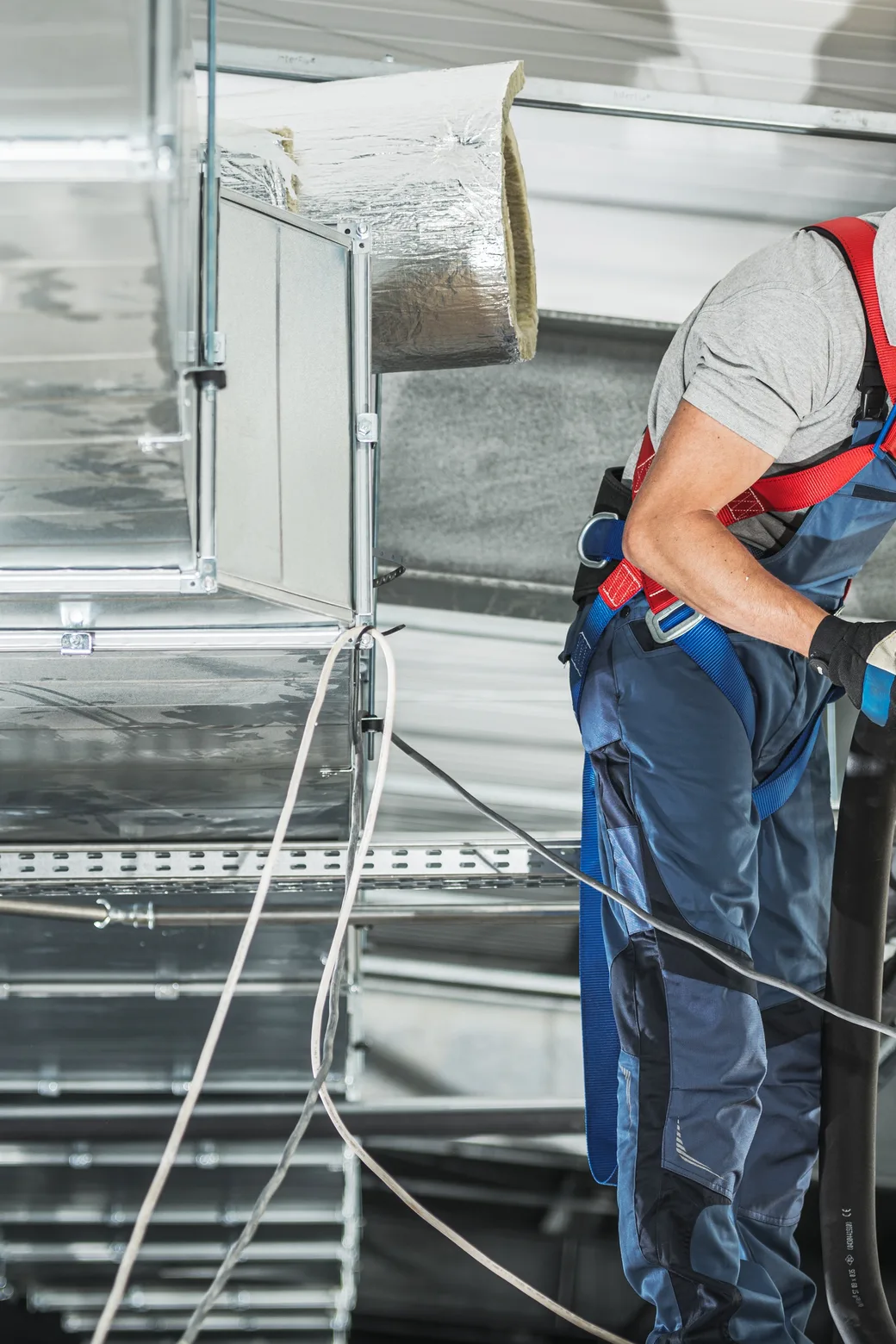
NOAA’s normals at the Denver International Airport station show a heating load several times the cooling load, and Census data show utility gas heating a far larger share of Colorado homes than it does nationally, with electric heat well below the national share and fuel oil almost absent. That makes gas furnaces, flues, burners and gas piping the core of a Colorado HVAC book — the same work the Pikes Peak department licenses separately and tests technicians on with gas and carbon-monoxide instruments. Colorado’s housing is newer than the national median and leans slightly more toward buildings of five or more units, so crews spend time in apartment mechanical rooms and on multifamily roofs in Denver, Aurora and Fort Collins as well as in single-family basements. Hot, dry summers bring refrigerated cooling and the evaporative coolers Denver’s heating and ventilating certificates cover, with the Grand Junction side of the state leaning further toward cooling. The diagram below pairs those exposures with the lines that answer them: furnace and gas-line work that fails later under general liability, gauges and recovery machines under contractors equipment, crews covered by the workers compensation policy the Pikes Peak department checks, and vans crossing the Front Range under commercial auto.
Colorado furnace, ductwork and rooftop claims
The losses we build Colorado programs around come from gas heat, multifamily buildings and the licensing lines between jurisdictions.
- A furnace vent that fails after a Colorado Springs changeout — a flue or gas connection left wrong surfaces weeks later as carbon monoxide or a fire in the house — completed operations under general liability, the kind of work a Pikes Peak Mechanical Contractor B license describes.
- An evaporative cooler or condensate line that leaks into a Denver ceiling — water damage in a unit below the one you serviced is a third-party property claim under general liability, and in a building of five or more units it can reach several tenants.
- An uninsured sole-proprietor sub hurt on your job — Colorado presumes a paid worker is an employee unless the independence test is met, and the Division warns that contracting with an uninsured business puts the hiring firm at risk, so an injured sub without coverage or a filed rejection can become a claim on your workers compensation policy.
- A service van accident between the Front Range and Grand Junction — a loaded van that slides into another car on a snowy mountain grade leaves you facing that driver’s injuries and repairs under commercial auto.
- Recovery machines and gauges stolen from a truck in Aurora — gear taken overnight from a van or jobsite is a contractors equipment loss.
Certificates for Pikes Peak, credentials for Denver: how we support a Colorado HVAC shop
We start with the jurisdictions you work in. For Pikes Peak we issue the certificate with the Regional Building Department as holder, in the insured name exactly as it appears on your license including trade names, with a real policy number and the advance notice of cancellation or reduction the department asks for, and with coverage that matches every kind of work your license class allows — residential and commercial if the license reaches both. For Denver we match the operations description to the supervisor certificates behind your license, so a Heating and Ventilating Class A shop doing split-system work is written with the refrigeration certificate in mind. For owners who run without employees, we walk through Colorado’s rejection-of-coverage filing before it becomes a permit problem, and for crews that drive between Denver, Colorado Springs and the Western Slope we schedule the vans and the gear that ride in them.
Major Colorado HVAC Markets
Colorado is not one market — it is a dense Denver Front Range, a fast-growing Colorado Springs and Fort Collins, a large Aurora, a foothills Boulder, and a high-desert Grand Junction, each with its own heating-and-cooling balance and service mix. These are the major HVAC submarkets we place across.
Denver / Front Range
The state’s dominant metro pairs cold, snowy winters with hot, dry summers, so heating leads while refrigerated cooling demand is significant at lower elevation. A deep residential service-and-replacement base runs alongside heavy commercial and mechanical work across its dense building stock.
Colorado Springs
A fast-growing Front Range market at altitude where cold winters keep heating central and summer cooling is meaningful in the lower areas. Military, institutional, and commercial mechanical work sits alongside a large residential service base, with local mechanical licensing through the regional building department.
Aurora
A large Denver-metro market with its own local mechanical licensing, blending a broad residential service base with commercial and new-construction mechanical work. Cold winters drive heating demand while warm, dry summers sustain cooling service.
Fort Collins / Northern Colorado
A growing northern Front Range corridor where new residential and commercial construction drives install and changeout work. High-plains winters keep heating reliability central, with cooling demand rising across the lower-elevation metro.
Boulder
A foothills market combining institutional and tech-sector commercial buildings with an established residential base. Cold mountain-adjacent winters make heating the core exposure, with summer cooling and energy-efficiency retrofit work adding to the mix.
Grand Junction / Western Slope
A high-desert western-Colorado market where hot, dry summers make cooling more prominent than on the Front Range, while cold winters still drive heating work. Residential service and commercial mechanical work span a wide regional footprint.
Colorado is one of the 48 states we are licensed in. As each state page comes online you can compare licensing, season, and market conditions across every state we serve.
Reading for a Colorado shop working several jurisdictions
Start with workers compensation, since the Pikes Peak department checks it at every permit and renewal, and how HVAC comp is classified. For the gas furnace work that fills a Colorado winter, read how carbon-monoxide claims are handled and completed-operations coverage; for Denver apartment and evaporative-cooler work, whether general liability covers a failed condensate line. Denver and Colorado Springs commercial mechanical shops should read commercial HVAC contractor insurance and Front Range service companies residential HVAC contractor insurance; a crew that also works across the state line can compare rules on the states we serve index.
Colorado HVAC Insurance FAQs
What insurance paperwork does the Pikes Peak Regional Building Department require from a heating contractor?
With no statewide HVAC license in Colorado, the requirements come from each building department, and the Pikes Peak Regional Building Department, which licenses Colorado Springs and much of El Paso County, spells them out. It asks for a certificate naming the department as certificate holder, the insured name matching the license exactly, a policy number rather than a binder, an endorsement giving the department advance notice of any cancellation or reduction, coverage for every kind of work the license allows, and minimum general liability limits by license category. It also needs a workers’ comp certificate, or a rejection approved by the state Division of Workers’ Compensation, before it sells a permit or renews a license.
Is a Colorado Springs mechanical license good in Denver?
No. Denver says it does not accept or reciprocate contractor licenses or certificates from other counties or states. To take Denver work, the company must hold or employ someone with a Denver supervisor certificate for the trade — Heating and Ventilating, Refrigeration, or Steam and Hot Water, for example — and then obtain a Denver contractor license. Your insurance certificate should name the same entity Denver’s Community Planning and Development licenses.
Which Pikes Peak license fits a Colorado HVAC maintenance and repair contractor?
The Pikes Peak Regional Building Department has a Mechanical Contractor C specialty for residential maintenance, repair and replacement on existing heating, ventilating and air-conditioning systems in one- and two-family dwellings. Service technicians working for a licensed contractor hold a Heating Mechanic IV license and may work only on the equipment their employer’s license covers. A maintenance-agreement book under that Pikes Peak specialty is still a completed-operations exposure, so the policy should describe the service work the license allows and you actually do.
Who can install ductwork in Denver, and how is it insured?
In Denver, ductwork falls under the Heating and Ventilating supervisor certificates, along with warm-air heating, ventilation, evaporative cooling and gas piping; the Class B certificate limits that work to one- and two-family dwellings and townhomes. When ductwork separates or leaks after the job and damages the building, general liability answers for that damage through its completed-operations coverage, so the operations description on a Denver shop’s policy should cover the ductwork the certificate allows.
Does a one-person Colorado HVAC business have to file a rejection of workers’ comp coverage?
It needs either coverage or a filed rejection. Colorado’s Division of Workers’ Compensation says a construction business must insure its owner or reject coverage even as a sole proprietorship or partnership, and corporate officers and LLC members count as employees unless they meet the Division’s ownership and officer tests and reject. A business that files nothing is out of compliance, and in the Pikes Peak region the approved rejection is what lets you renew your license without a comp certificate.
Why does gas furnace work drive liability claims for Front Range HVAC shops?
Because gas heat dominates here. Census data show utility gas heating a far larger share of Colorado homes than nationally, and NOAA normals at Denver International Airport show a heating load several times the cooling load. A flue, burner or gas connection that fails after the job can cause carbon-monoxide exposure or a fire, which is a completed-operations claim. The Pikes Peak department reflects the same risk by requiring Heating Mechanic IV technicians to show they can use combustible gas and carbon-monoxide detection instruments.
Get a Colorado HVAC insurance quote
Tell us how your Colorado operation works — residential service, commercial and mechanical, or both — and we will market it to carriers that write the class.